Tulsi, also called holy basil, is one of the most loved plants in Indian homes. People keep it in courtyards, balconies and near windows for its fresh fragrance, its daily use in tea and its religious importance. But many people find that their tulsi plant dries, turns black or stops growing, especially when the weather changes.
The good news is that tulsi plant care is simple once you understand what the plant needs. In this guide, you will learn how to grow tulsi at home from seeds or cuttings, the right sunlight, soil and watering routine, how to prune it for bushy growth, how to protect it in winter and how to fix a drying tulsi plant.
Quick answer: Tulsi needs 5 to 6 hours of sunlight, well-draining soil and water only when the top 1 inch of soil feels dry. Pinch the tips regularly to keep it bushy, remove the flower spikes, and in winter protect the plant from cold and water it less.
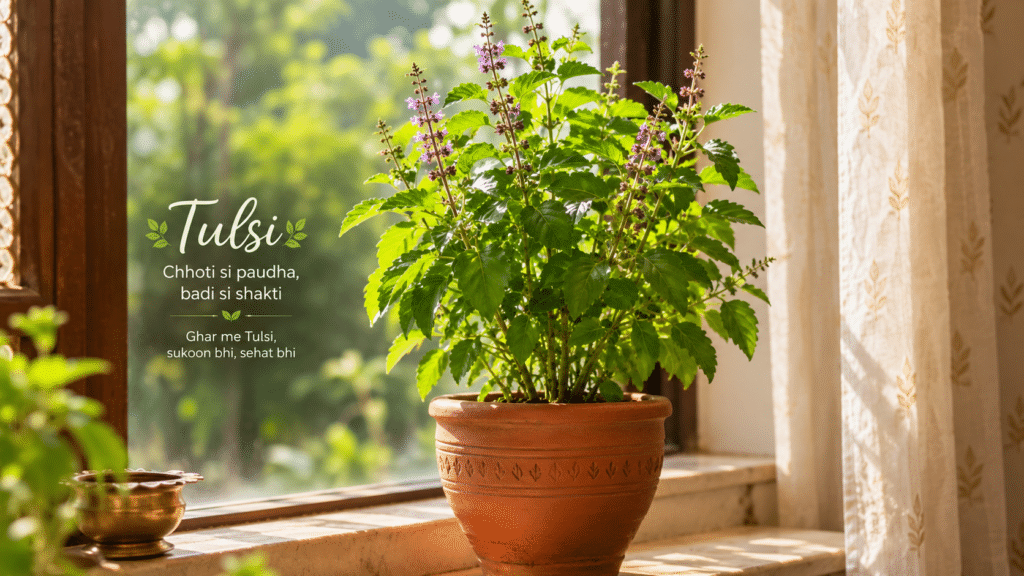
What to show: A healthy, bushy tulsi plant in a terracotta pot, photographed in soft morning sunlight
Alt text: Healthy bushy tulsi plant in a terracotta pot growing in morning sunlight
File name: healthy-tulsi-plant-in-pot.webp
Types of Tulsi Plant
Before you start, it helps to know the three common types. All of them can be grown in the same way.
Rama Tulsi
The most common type in Indian homes. It has light green leaves and a mild, sweet fragrance.
Shyama (Krishna) Tulsi
This type has purple-green leaves and a stronger smell. It grows well in pots and looks beautiful on a balcony.
Vana Tulsi
A taller, wild variety with larger leaves and a strong clove-like smell. It needs a little more space than the other two.
Best Place and Pot for Tulsi
Sunlight: Tulsi loves the sun. Give it 5 to 6 hours of direct light every day. An east-facing balcony or courtyard is ideal because it gets gentle morning sun. In very hot areas, give light shade during the harsh afternoon.
Pot size: Use a pot that is 10 to 12 inches wide and deep, with drainage holes at the bottom. Terracotta, plastic or a traditional tulsi chaura all work well.
Airflow: Keep the plant where air can move freely. A closed, damp corner invites fungus and pests.
Indoors: Tulsi can grow indoors only near a very bright window. In low light it becomes thin, tall and weak. If you do not have a sunny spot, read our guide on how to care for indoor plants or choose a bright balcony from our list of the best plants for yourbalcony garden.
Best Soil Mix for Tulsi
Tulsi grows best in light, loose soil that drains water quickly. Mix:
2 parts garden soil
1 part compost or vermicompost
1 part sand or cocopeat
Place a small piece of broken pot or a few stones over the drainage hole so the soil does not wash out. You can make your own compost by following our guide on how to make organic manure at home from kitchen waste.
How to Grow Tulsi at Home: Seeds and Cuttings
The best time to start tulsi is late winter to early spring and the rainy season, when the weather is warm. Avoid sowing in the cold months.
Growing Tulsi from Seeds
Fill the pot with the soil mix and moisten it lightly.
Sprinkle the tiny seeds evenly on the surface and cover them with a thin layer of soil, about ¼ inch.
Mist the soil daily so it stays damp but not soggy, and keep the pot in a warm, bright place.
Seeds usually sprout in 1 to 2 weeks.
When the seedlings are 3 to 4 inches tall, thin them out and keep only the strongest ones. One or two plants in a 12-inch pot is enough.
Growing Tulsi from Cuttings
Cut a 4 to 6 inch piece of a healthy stem just below a leaf node. Choose a stem without flowers.
Remove the lower leaves.
Place the cutting in a glass of water in bright, indirect light and change the water every 2 to 3 days.
Roots appear in about 2 to 3 weeks. When they are 1 to 2 inches long, plant the cutting in the soil mix.
Tulsi Plant Watering: How Much and How Often
Watering mistakes are the number one reason tulsi plants die. Use the finger test: push your finger 1 inch into the soil and water only if it feels dry.
Summer: Water daily or every second day, depending on the heat.
Monsoon: Water only when the soil is dry. Rain is often enough.
Winter: Water every 2 to 3 days or even less. Cold, wet soil causes root rot.
Water at the base of the plant in the morning so the leaves stay dry and the extra water can drain away. Never let water collect in the plate under the pot. For a complete routine, see our guide on how to water pot plants properly.
Fertilizer for Tulsi
Tulsi does not need heavy feeding. Mix a small handful of vermicompost or well-rotted compost into the top layer of soil once every 30 to 45 days during the warm growing season. Skip fertilizer in the deep winter months.
Since you use the leaves in tea and food, it is best to avoid chemical fertilizers and stay with organic options. To understand why this matters, read the benefits of organic plants.
How to Prune Tulsi for Bushy Growth
Pruning is the secret to a full, bushy tulsi plant.
Pinch the tips: When the plant is about 6 inches tall, pinch off the top 1 inch just above a pair of leaves. Repeat every 2 weeks. The plant will grow side branches instead of one thin stem.
Remove the flower spikes: The long flower spikes (manjari) take energy away from the leaves. Pluck them as soon as they appear. At the end of the season, you can leave one or two to dry if you want to collect seeds.
Harvest from the top: Pluck leaves from the top and never remove more than one-third of the plant at one time.
Renew the plant: After 2 to 3 years, tulsi becomes woody and leggy. Take fresh cuttings and grow new plants.
Tulsi Plant Care in Winter
Tulsi is a warm-weather plant. Cold nights and frost can turn the leaves black or brown. Follow these steps to protect it:
Move the pot to the sunniest spot you have, near a wall or in a sheltered corner.
On very cold nights, bring it indoors or cover it loosely with a cotton cloth or jute bag. Remove the cover in the morning so the plant gets sunlight and air.
Water less, and only in the morning.
Do not fertilize until the weather turns warm again.
If the leaves dry up, do not throw the plant away. Gently scratch the stem with your nail. If it is green inside, the plant is alive and will usually grow back in spring. Trim the dry parts once the cold passes.
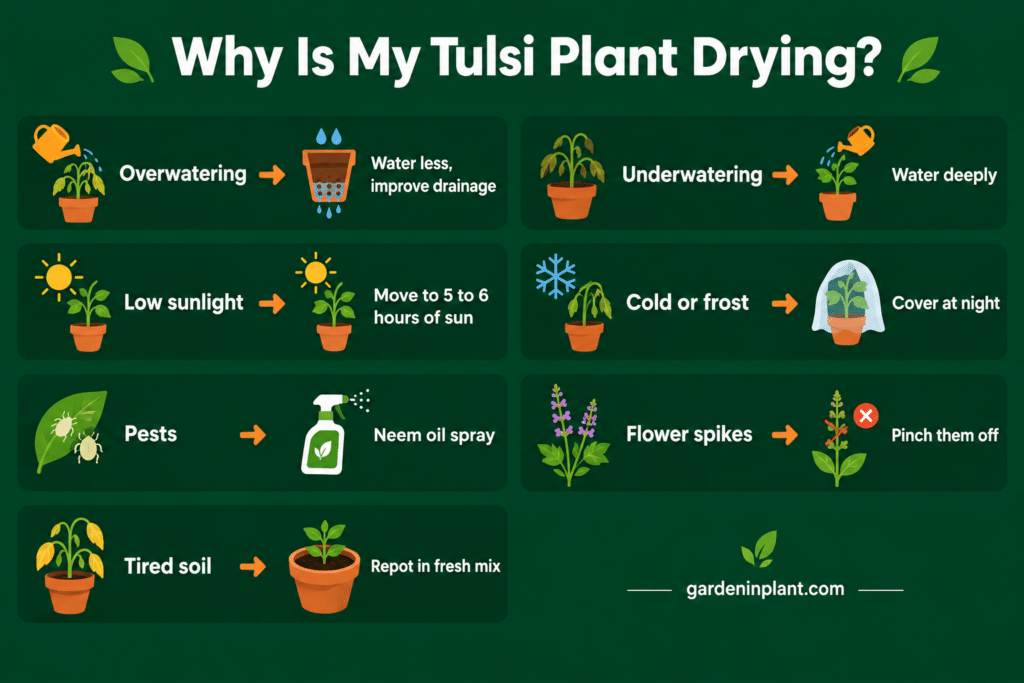
Why Is My Tulsi Plant Drying? Causes and Fixes
Overwatering: Yellow leaves, mushy stems and soil that never dries. Stop watering until the top inch is dry and check that the pot drains well.
Underwatering: Crispy, drooping leaves and very dry soil. Water deeply until it flows out of the drainage hole.
Low sunlight: Thin, tall, pale plant. Move it to a spot with 5 to 6 hours of sun.
Cold or frost: Black or brown leaves in winter. Cover the plant at night and shift it to a sheltered place.
Pests: Sticky leaves, small holes or white cotton-like patches. Spray a neem oil mixture as explained in our guide on natural pest control for plants at home.
Flower spikes left on the plant: Small leaves and slow growth. Pinch the spikes regularly.
Root-bound pot or tired soil: Water runs straight out and growth stops. Repot into a bigger pot with a fresh soil mix.
What to show: A clean infographic made from the list above (you can make it in Canva). Title text: Why Is My Tulsi Plant Drying? Add 7 rows in the format Problem → Fix, for example: Overwatering → Water less, improve drainage. Underwatering → Water deeply. Low sunlight → Move to 5 to 6 hours of sun. Cold → Cover at night. Pests → Neem oil spray. Flower spikes → Pinch them off. Tired soil → Repot in fresh mix. Footer text: gardeninplant.com
Alt text: Infographic showing the causes of a drying tulsi plant and how to fix each problem
Using Tulsi Leaves at Home
Pluck leaves in the morning with clean fingers or scissors. Many families use fresh tulsi leaves in tea and home cooking. Wash the leaves before use. If you plan to use tulsi for any health purpose, check with your doctor first. Tulsi also grows well beside other herbs, so it is a great addition to a kitchen garden.
Frequently Asked Questions
How much sunlight does a tulsi plant need?
Tulsi needs 5 to 6 hours of direct sunlight every day for healthy, fragrant leaves.
Can I grow tulsi indoors?
Yes, but only near a very bright window. In low light the plant becomes thin and weak, so it is better to keep it on a sunny balcony or windowsill.
Why are my tulsi leaves turning black?
Black or brown leaves are most often caused by cold weather or frost. Overwatering and fungus can also be a reason, so check the soil and protect the plant at night.
How long does a tulsi plant live?
Tulsi is a perennial plant, but it usually becomes woody and less productive after 2 to 3 years. Grow new plants from cuttings or seeds to keep fresh growth.
Can I grow tulsi in water?
Cuttings can root in water, but the plant grows better in soil. Move the cutting to a pot once the roots are 1 to 2 inches long.
Should I remove the flowers from my tulsi plant?
Yes. Removing the flower spikes (manjari) makes the plant bushier and gives you more leaves. Leave one or two only if you want to collect seeds.
Conclusion
Tulsi plant care is easy when you follow the basics: plenty of sunlight, light well-draining soil, careful watering and regular pinching of the tips. Pay special attention to winter, because cold and wet soil are the biggest reasons tulsi dries. If your plant does start to look weak, check the causes above and fix them early.
With a little care, your tulsi will stay green, bushy and fragrant for years. Do you have a tulsi plant at home? Share your tips or questions in the comments below.