Growing your own vegetables at home is one of the healthiest and most rewarding habits you can develop. A kitchen garden gives you fresh, organic vegetables, herbs, and fruits right outside your door. Whether you live in an apartment, independent house, or small urban home, you can easily start a kitchen garden using pots, containers, grow bags, or a small backyard space.
Kitchen gardening is becoming very popular because people now want chemical-free food, healthier lifestyles, and a stronger connection with nature. Even beginners with no gardening experience can successfully grow vegetables at home by following the right methods.
In this detailed guide, you will learn everything about starting a kitchen garden step by step.
What is a Kitchen Garden?
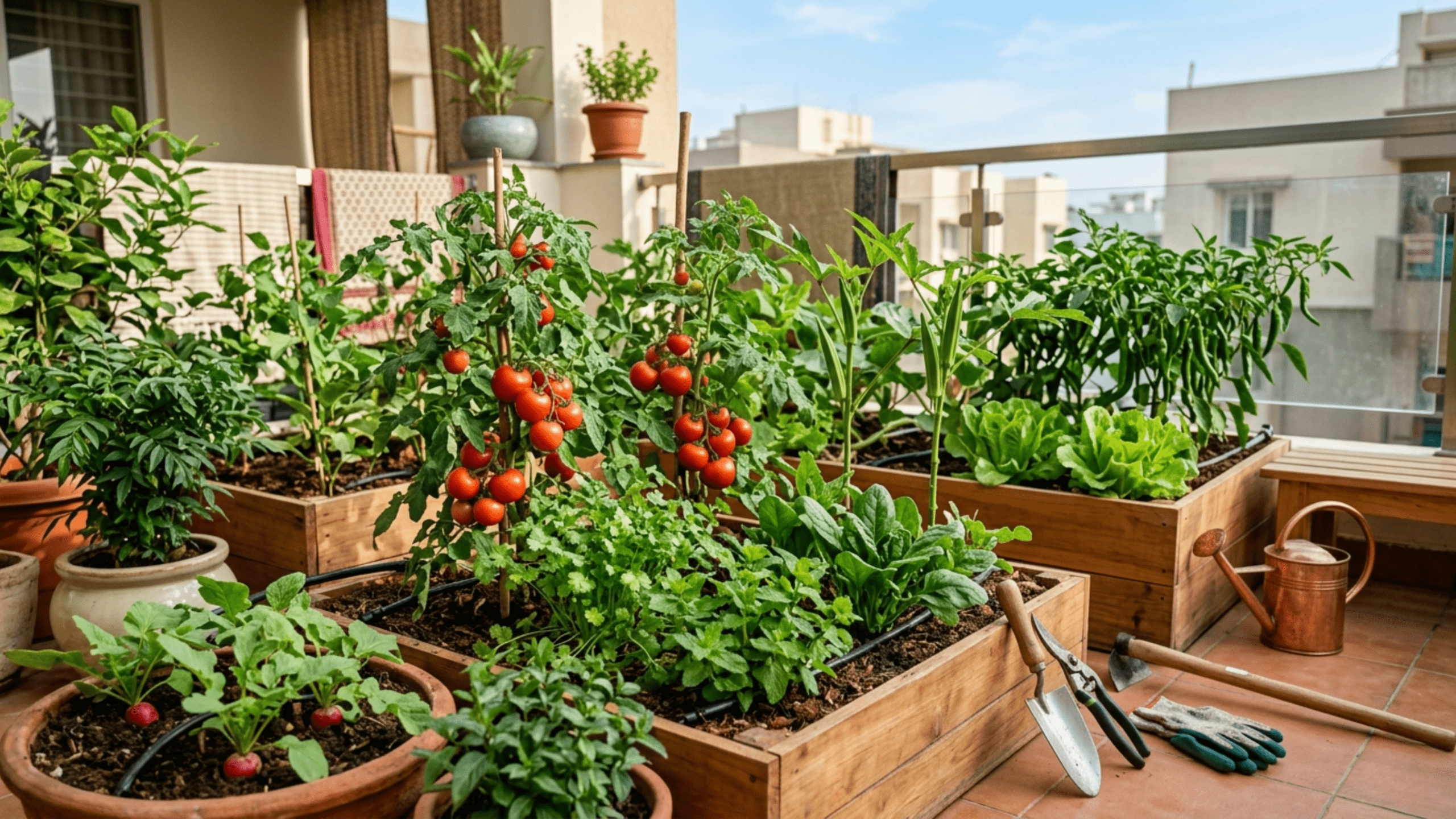
A kitchen garden is a small home garden where vegetables, herbs, fruits, and spices are grown mainly for daily household cooking purposes. These gardens are usually created in balconies, terraces, rooftops, backyards, patios, or even near sunny windows.
Unlike large farms, kitchen gardens are small, easy to maintain, and designed to provide fresh produce for family use.
Common plants grown in kitchen gardens include:
- Tomatoes
- Coriander
- Mint
- Green chilies
- Spinach
- Fenugreek
- Okra
- Radish
- Lettuce
- Curry leaves
Kitchen gardens help families consume fresh food while reducing dependency on market vegetables that may contain harmful chemicals.
Why Should You Start a Kitchen Garden?
There are many benefits of starting a kitchen garden at home.
1. Fresh and Chemical-Free Vegetables
One of the biggest advantages of kitchen gardening is that you know exactly how your food is grown. Market vegetables are often sprayed with pesticides and chemicals to increase shelf life and production.
In your own garden:
- You control the fertilizers
- You avoid harmful chemicals
- You harvest vegetables fresh
Freshly harvested vegetables contain more nutrients and better taste compared to store-bought vegetables.
2. Saves Money on Groceries
Vegetables and herbs are becoming expensive in many cities. Growing vegetables at home can reduce your regular grocery expenses.
For example:
- Coriander
- Mint
- Chilies
- Spinach
These are frequently used in Indian kitchens and can be grown continuously at very low cost.
Over time, your kitchen garden becomes an investment that keeps giving fresh produce every season.
3. Good for Physical and Mental Health
Gardening is a healthy activity that keeps you physically active and mentally relaxed.
Benefits include:
- Reduces stress
- Improves mood
- Encourages outdoor activity
- Provides mental peace
- Reduces anxiety
Many people consider gardening a natural therapy because spending time with plants creates a calm and positive environment.
4. Environment Friendly
Kitchen gardens help the environment in many ways.
They:
- Reduce plastic waste from packaged vegetables
- Improve air quality
- Support biodiversity
- Reduce carbon footprint
- Encourage composting of kitchen waste
Even a small home garden contributes positively to nature.
Choosing the Right Location for Your Kitchen Garden
The success of your kitchen garden depends greatly on selecting the right location.
Importance of Sunlight
Most vegetables need:
- 4–6 hours of direct sunlight daily
- Warm temperature
- Good air circulation
Without enough sunlight:
- Plants become weak
- Growth slows down
- Vegetables become smaller
Best Places for Kitchen Gardening
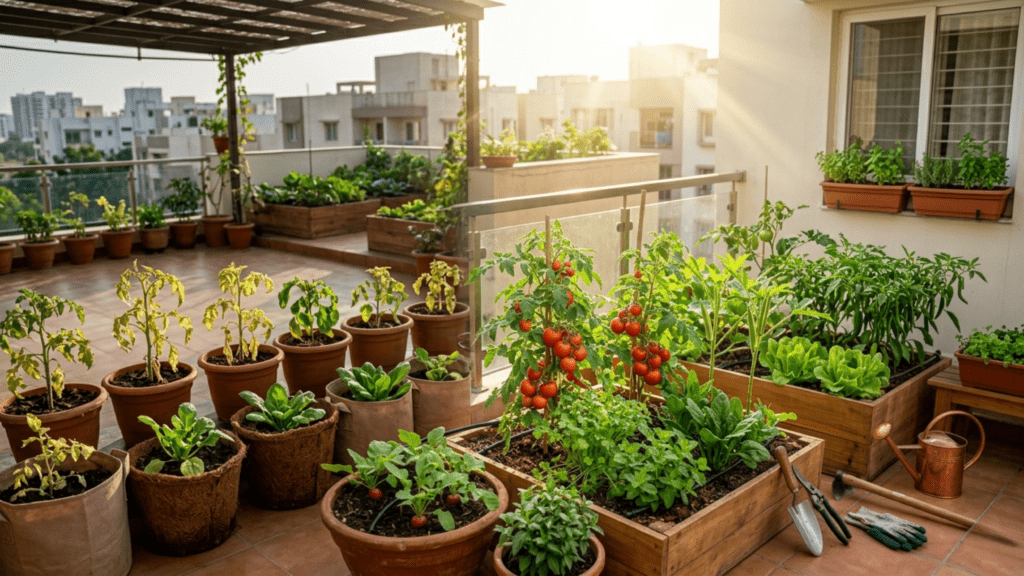
- Balcony
- Terrace
- Rooftop
- Backyard
- Patio
- Window with sunlight
South-facing areas usually receive better sunlight for growing vegetables.
Essential Things Required for Kitchen Gardening
Before starting your garden, arrange the necessary gardening materials.
1. Pots or Grow Bags
Containers are important because they hold soil and plants.
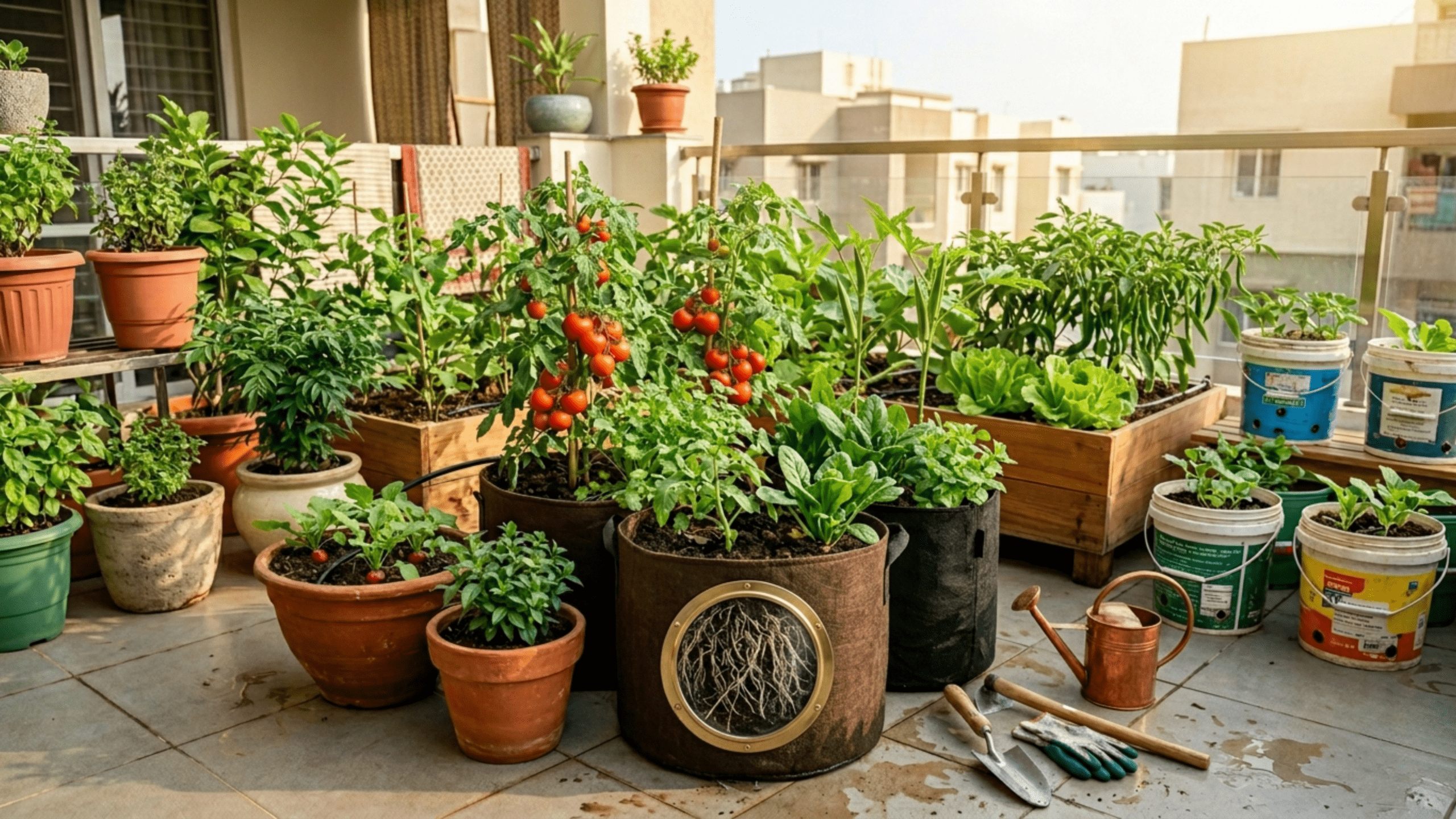
Popular Options:
- Clay pots
- Plastic pots
- Cement pots
- Grow bags
- Wooden boxes
- Recycled buckets
Grow bags are very popular because they:
- Are lightweight
- Have good drainage
- Are affordable
- Allow healthy root growth
Always ensure containers have drainage holes at the bottom.
2. Good Quality Soil
Healthy soil is the foundation of successful gardening.
Good soil should be:
- Soft
- Fertile
- Well-drained
- Rich in nutrients
Best Soil Mix for Kitchen Garden
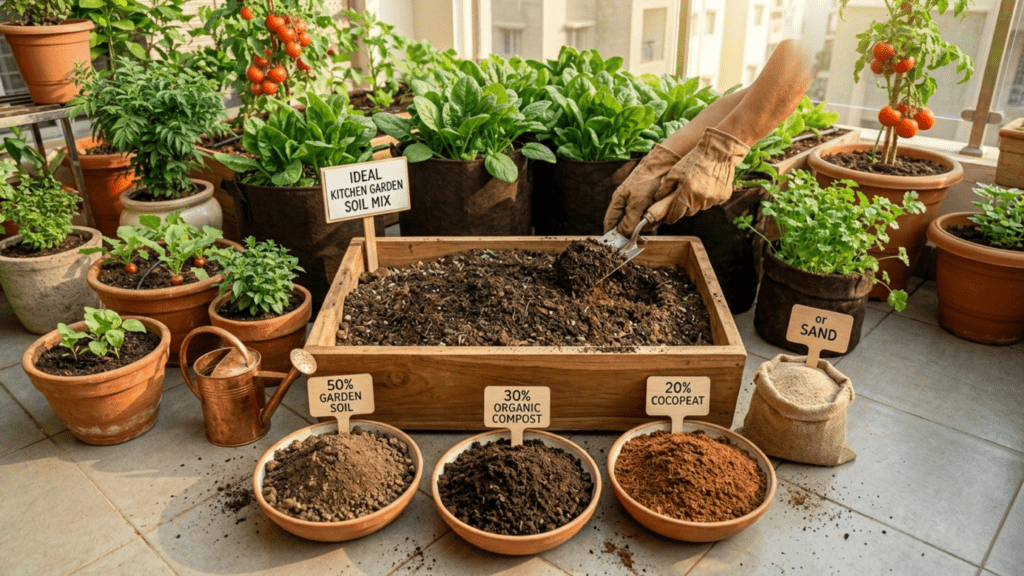
A simple and effective soil mixture:
- 50% garden soil
- 30% compost
- 20% cocopeat or sand
Why This Soil Mix Works
- Garden soil provides minerals
- Compost adds nutrients
- Cocopeat improves water retention and airflow
Healthy soil helps roots grow faster and stronger.
3. Organic Compost
Plants require nutrients for proper growth.
Organic compost improves:
- Soil fertility
- Water retention
- Plant health
Types of Organic Compost
- Vermicompost
- Cow dung manure
- Kitchen compost
- Leaf compost
Organic compost is safer and healthier than chemical fertilizers.
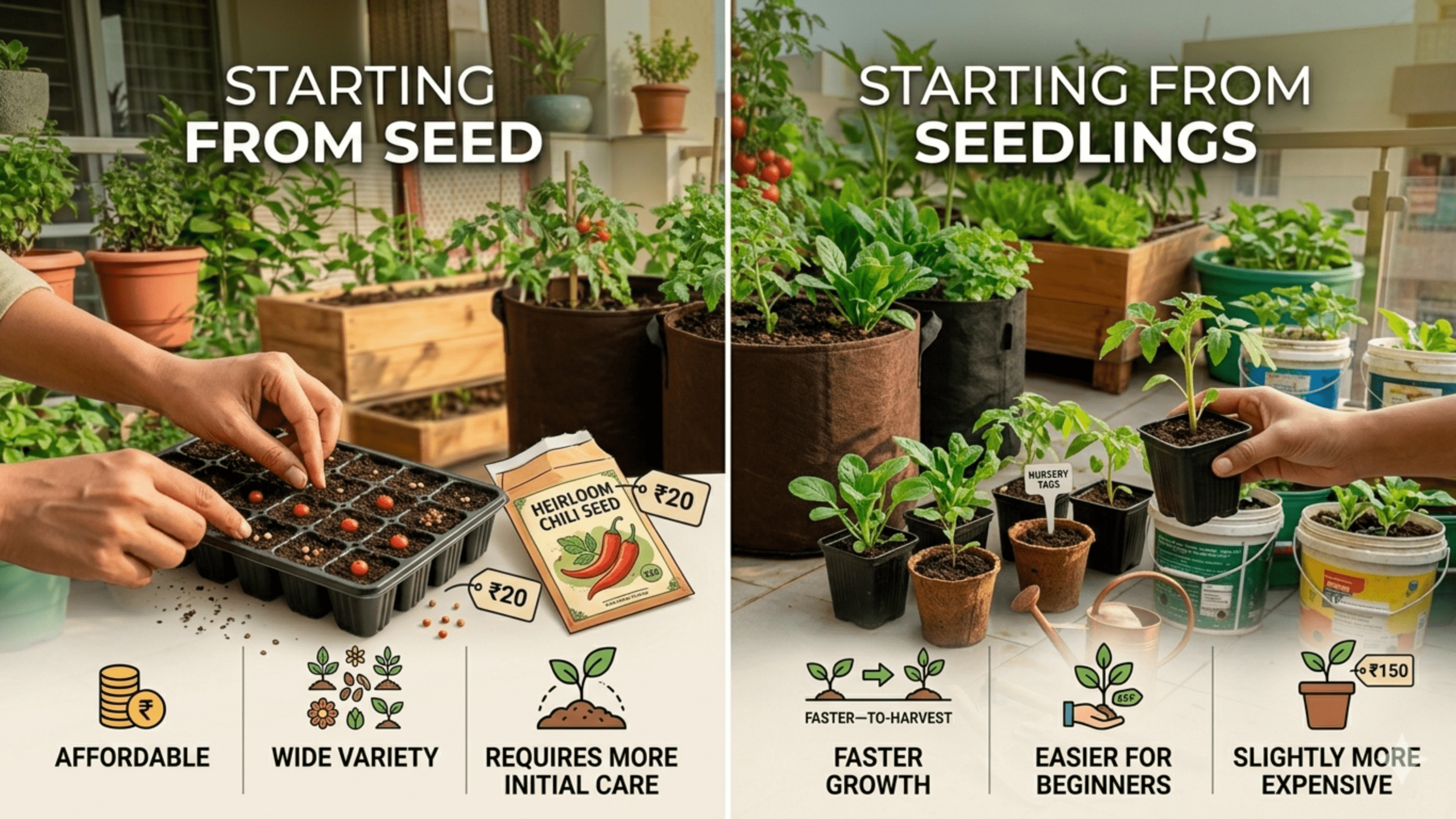
4. Seeds or Seedlings
You can start plants using:
- Seeds
- Nursery seedlings
Seeds
- Affordable
- Wide variety available
- Require more care initially
Seedlings
- Faster growth
- Easier for beginners
- Slightly more expensive
Beginners often find seedlings easier to manage.
Best Vegetables for Beginners
Some plants are easier to grow and maintain.
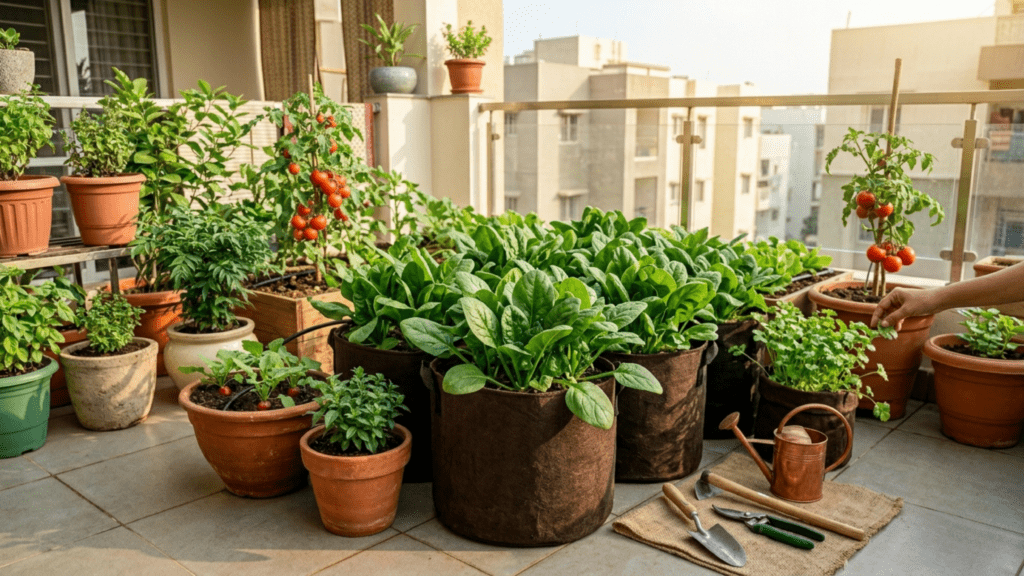
Tomatoes
Tomatoes are one of the most popular kitchen garden vegetables.
Requirements:
- 6 hours sunlight
- Regular watering
- Support sticks
Tomatoes grow well in pots and produce vegetables continuously for weeks.
Spinach
Spinach is fast-growing and perfect for beginners.
Benefits:
- Requires less space
- Ready in 30–40 days
- Grows easily in containers
Coriander
Coriander is commonly used in Indian cooking and grows quickly.
Tips:
- Crush seeds slightly before sowing
- Keep soil moist
- Harvest regularly
Mint
Mint grows very fast and requires minimal care.
Important Tip:
Always grow mint in separate containers because it spreads aggressively.
Green Chilies
Green chili plants are productive and easy to maintain.
A single healthy plant can provide chilies for several months.
Step-by-Step Process to Start a Kitchen Garden
Step 1: Plan Your Garden
Before planting:
- Decide available space
- Choose vegetables
- Estimate sunlight
- Arrange containers
Start with 4–5 easy vegetables instead of planting too many crops initially.
Step 2: Prepare Containers
Fill pots or grow bags with prepared soil mix.
Important Tips:
- Do not overfill containers
- Leave 1–2 inches space at the top
- Ensure proper drainage
Drainage prevents root rot and fungal diseases.
Step 3: Sow Seeds Properly
Different seeds require different planting depths.
General Rule:
Plant seeds at depth equal to 2–3 times their size.
After sowing:
- Cover lightly with soil
- Water gently
- Keep in sunlight
Avoid pressing soil too tightly.
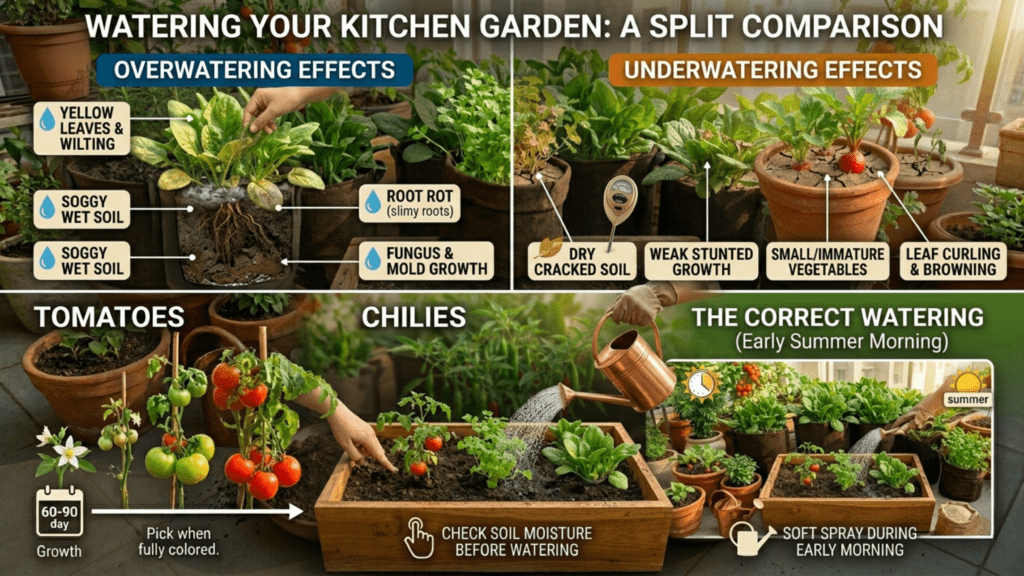
Step 4: Water Carefully
Watering is one of the most important gardening tasks.
Overwatering Problems
- Root rot
- Fungus
- Yellow leaves
Underwatering Problems
- Dry soil
- Weak growth
- Small vegetables
Best Watering Tips
- Water early morning
- Check soil before watering
- Use watering can with soft spray
Plants usually need more water during summer.
Step 5: Give Proper Sunlight
Vegetables require sunlight for photosynthesis.
Sunlight Needs
- Leafy vegetables: 3–4 hours
- Fruiting vegetables: 6–8 hours
If your home has limited sunlight:
- Grow herbs
- Use reflective surfaces
- Move pots during the day
Step 6: Add Fertilizers Regularly
Plants absorb nutrients continuously from soil.
Feed plants every 15–20 days using:
- Vermicompost
- Mustard cake fertilizer
- Banana peel fertilizer
- Compost tea
Healthy nutrition leads to:
- Faster growth
- More flowers
- Better vegetable production
Step 7: Protect Plants from Pests and Diseases
Pests are common in kitchen gardens.
Common Garden Pests
- Aphids
- Mealybugs
- Caterpillars
- Whiteflies
Natural Pest Control Methods
Neem Oil Spray
Neem oil is safe and effective against many insects.
How to Use
- Mix neem oil with water
- Spray weekly on leaves
Garlic Spray
Garlic spray naturally repels insects.
Remove Damaged Leaves
Always remove infected leaves immediately to stop disease spread.
Common Mistakes Beginners Make
1. Growing Too Many Plants Initially
Beginners often plant too much at once and struggle with maintenance.
Start small and expand gradually.
2. Ignoring Drainage
Poor drainage causes waterlogging and root damage.
Always ensure containers have holes.
3. Using Low-Quality Soil
Cheap or hard soil reduces plant growth significantly.
Invest in healthy soil from the beginning.
4. Not Checking Plants Daily
Daily observation helps identify:
- Pest attacks
- Yellow leaves
- Water issues
- Growth problems
Early detection prevents bigger problems.
Seasonal Vegetables for Indian Kitchen Gardens
Summer Season
- Okra
- Cucumber
- Brinjal
- Chili
Winter Season
- Carrot
- Spinach
- Cauliflower
- Peas
Rainy Season
- Bottle gourd
- Bitter gourd
- Beans
Growing seasonal vegetables increases success rates and better harvests.
Composting Kitchen Waste for Gardening
Kitchen waste can become natural fertilizer.
Useful Waste Items
- Vegetable peels
- Fruit peels
- Tea leaves
- Eggshells
Benefits
- Reduces waste
- Creates free fertilizer
- Improves soil naturally
Avoid adding oily or cooked food waste.
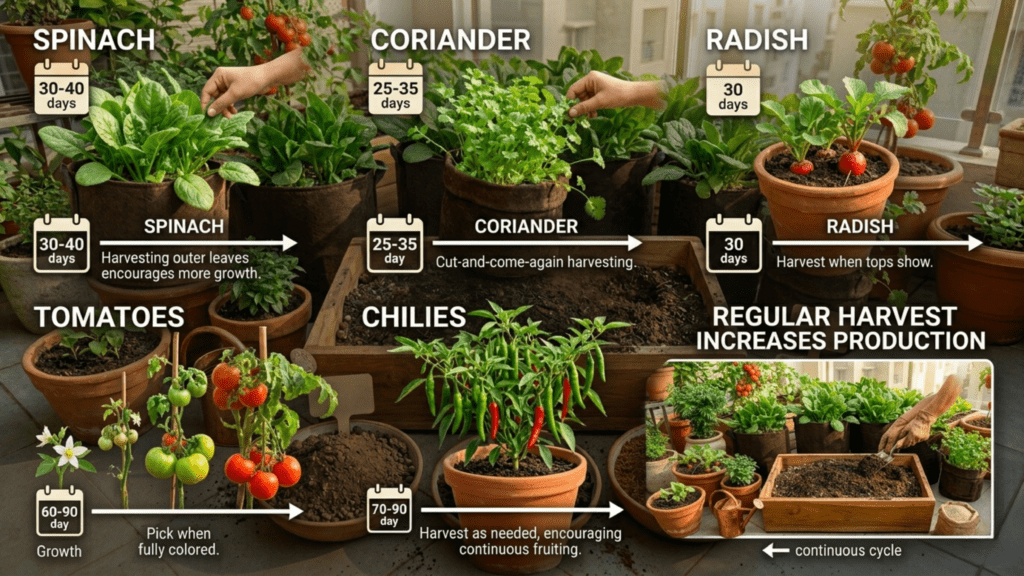
How Long Does It Take to Harvest?
Different vegetables grow at different speeds.
Approximate Harvest Time
- Spinach: 30–40 days
- Coriander: 25–35 days
- Radish: 30 days
- Tomatoes: 60–90 days
- Chilies: 70–90 days
Regular harvesting encourages plants to produce more vegetables.
Tips for a Successful Kitchen Garden
- Start with easy plants
- Use organic fertilizers
- Water regularly
- Give proper sunlight
- Monitor pests weekly
- Rotate crops seasonally
- Keep tools clean
- Harvest vegetables on time
Consistency is the key to successful gardening.
Final Thoughts
Starting a kitchen garden is one of the best ways to live a healthier and more sustainable lifestyle. You do not need a large space or expensive setup to begin. Even a few pots on a balcony can provide fresh vegetables and herbs for your daily cooking.
With proper sunlight, healthy soil, regular watering, and patience, anyone can grow a successful kitchen garden at home. Start small, learn gradually, and enjoy the satisfaction of eating vegetables grown by your own hands.