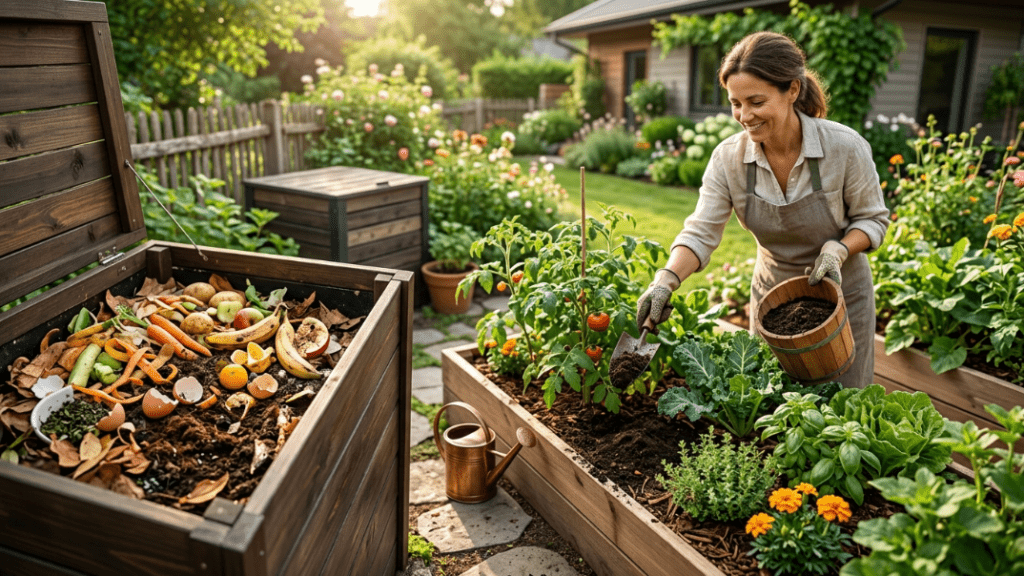
Organic manure is one of the best natural fertilizers for healthy plant growth and sustainable gardening. Instead of throwing away vegetable peels, fruit scraps, and other kitchen waste, you can easily recycle them into nutrient-rich compost at home. Learning how to make organic manure at home from kitchen waste is a simple and eco-friendly method that helps reduce household waste while improving soil fertility naturally. With the right balance of wet and dry waste, proper moisture, and regular mixing, you can create high-quality organic manure for your garden, indoor plants, or kitchen garden without spending extra money on chemical fertilizers.
Organic gardening is becoming increasingly popular because people now prefer chemical-free vegetables, eco-friendly gardening methods, and sustainable living. One of the best ways to improve soil naturally is by learning how to make organic manure at home from kitchen waste. Kitchen waste composting not only reduces household garbage but also creates nutrient-rich manure that helps plants grow faster and healthier.
Every day, homes produce vegetable peels, fruit scraps, tea leaves, eggshells, and leftover organic waste that usually ends up in dustbins. Instead of throwing these materials away, you can convert them into powerful homemade organic manure for your garden. This natural fertilizer improves soil fertility, increases moisture retention, and supports healthy plant growth without harmful chemicals.
In this detailed guide, you will learn step-by-step methods, required materials, benefits, common mistakes, and expert tips for making organic manure at home using kitchen waste.
What is Organic Manure?
Organic manure is a natural fertilizer made from decomposed plant and food waste. It contains important nutrients like nitrogen, phosphorus, potassium, calcium, and organic matter that improve soil health.
Unlike chemical fertilizers, organic manure releases nutrients slowly and safely into the soil. It improves soil texture, encourages beneficial microbes, and supports long-term plant growth.
Homemade organic manure is especially useful for:
- Vegetable gardens
- Flower plants
- Indoor plants
- Terrace gardens
- Fruit plants
- Kitchen gardens
Using homemade manure regularly can significantly improve plant health and productivity.
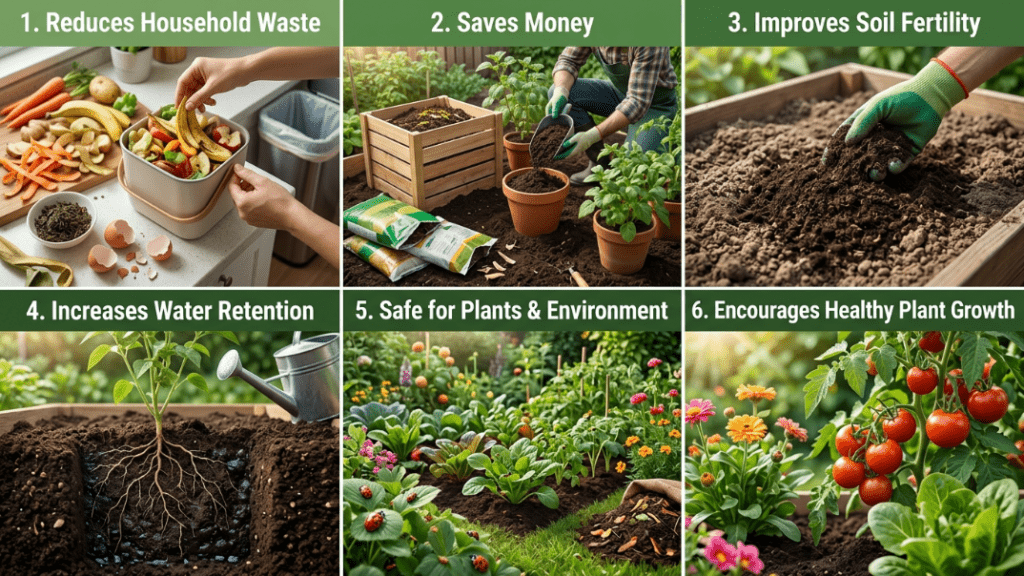
Benefits of Making Organic Manure at Home
Making organic manure from kitchen waste offers several environmental and gardening benefits.
Reduces Household Waste
A large portion of household waste comes from vegetable and fruit scraps. Composting helps reduce garbage accumulation and keeps the environment cleaner.
Saves Money
Homemade manure eliminates the need to buy expensive fertilizers from markets. Kitchen waste becomes a free source of plant nutrition.
Improves Soil Fertility
Organic manure increases the nutrient content of soil naturally. It also improves soil structure and aeration.
Increases Water Retention
Compost-rich soil retains moisture better, reducing the need for frequent watering.
Safe for Plants and Environment
Unlike chemical fertilizers, organic manure does not damage soil health or pollute groundwater.
Encourages Healthy Plant Growth
Plants grown with organic manure usually develop greener leaves, stronger roots, and better flowering.
Kitchen Waste That Can Be Used for Organic Manure
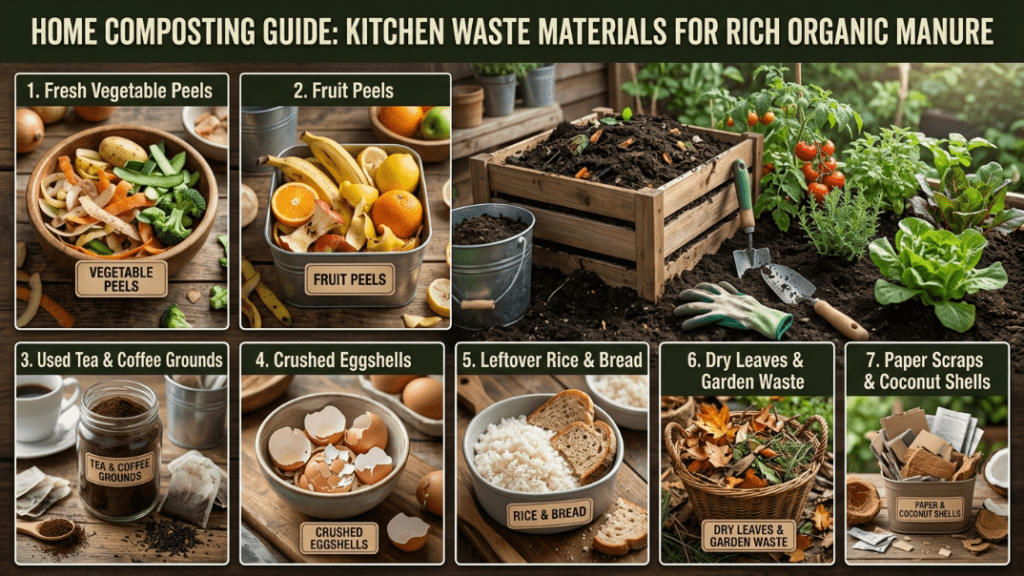
Many everyday kitchen materials can be composted easily.
Suitable Kitchen Waste
- Vegetable peels
- Fruit peels
- Tea leaves
- Coffee grounds
- Eggshells
- Leftover rice
- Bread pieces
- Dry leaves
- Paper scraps
- Coconut shells
- Garden waste
These materials decompose naturally and enrich the compost with nutrients.
Kitchen Waste to Avoid
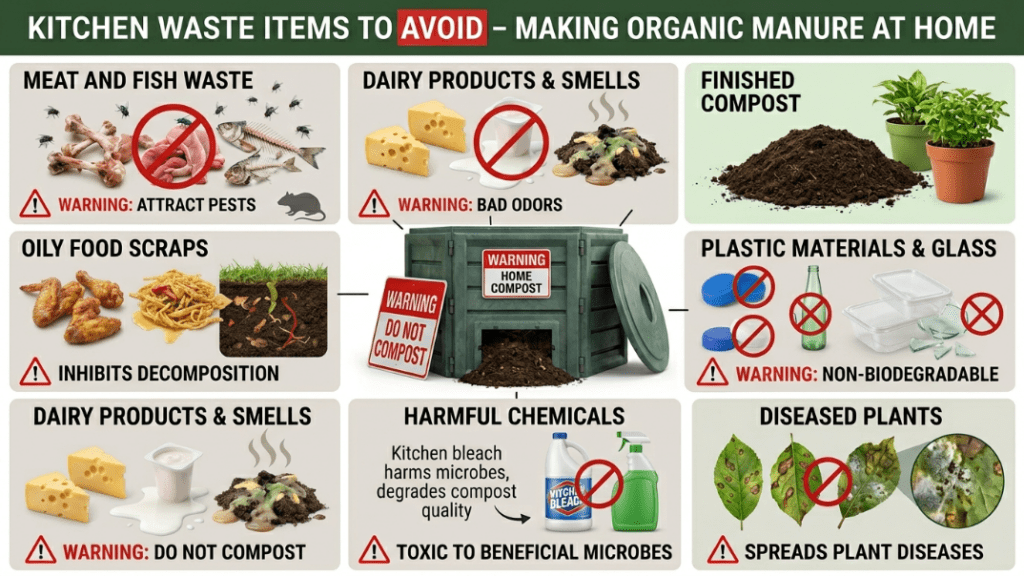
Some waste materials should not be added because they create foul smells or attract pests.
Avoid These Items
- Meat and fish waste
- Dairy products
- Oily food
- Plastic materials
- Glass
- Chemicals
- Diseased plants
These items may slow decomposition and create hygiene problems.
Materials Required for Composting
You do not need expensive equipment to make organic manure at home.
Basic Materials Needed
- Plastic bucket or compost bin
- Lid with air holes
- Dry leaves or newspaper
- Kitchen waste
- Garden soil
- Water spray bottle
- Small gardening shovel
A simple container with proper airflow is enough for starting composting at home.
Choosing the Right Composting Container
The container plays an important role in proper decomposition.
Ideal Compost Bin Features
- Good ventilation
- Drainage holes
- Lid to control insects
- Medium or large size
- Easy mixing access
You can use:
- Plastic buckets
- Earthen pots
- Old drums
- Wooden boxes
If using a bucket, make small holes on the sides and bottom for airflow and drainage.
Step-by-Step Process to Make Organic Manure
Making organic manure at home is simple if you follow the correct layering process.
Step 1: Prepare the Container
Choose a shaded area such as a balcony, terrace corner, or backyard.
Place the compost bin in a location where excess water can drain easily.
Add a layer of dry leaves, cardboard pieces, or newspaper at the bottom. This layer improves airflow and absorbs extra moisture.
Step 2: Add Kitchen Waste
Collect daily kitchen waste like fruit peels, vegetable scraps, and tea leaves.
Cut large pieces into smaller parts because smaller materials decompose faster.
Spread a thin layer of kitchen waste evenly inside the container.
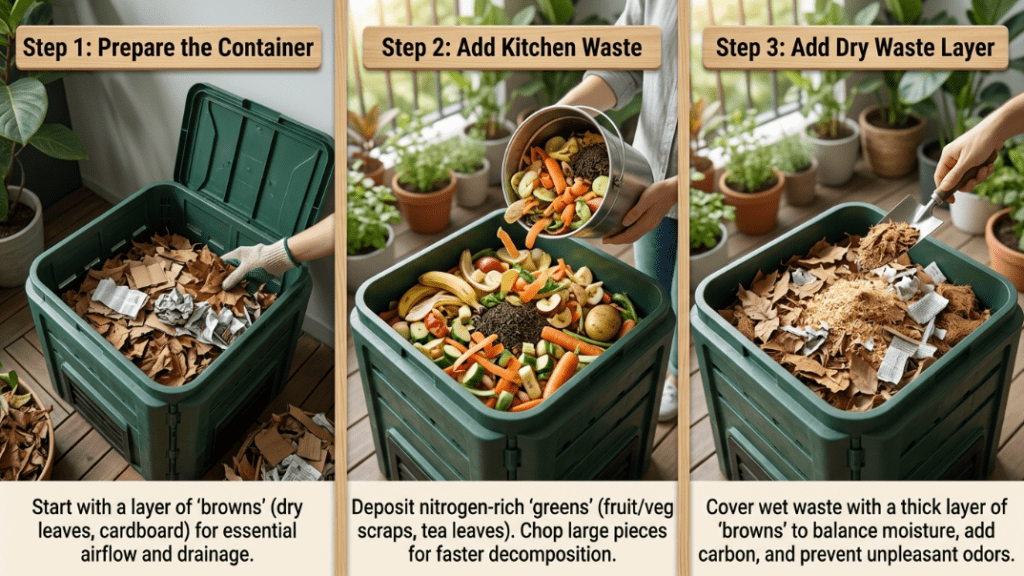
Step 3: Add Dry Waste Layer
After adding wet kitchen waste, cover it with dry materials such as:
- Dry leaves
- Sawdust
- Shredded newspaper
- Cocopeat
This dry layer balances moisture and prevents bad smell formation.
Maintaining a balance between wet and dry waste is very important for successful composting.
Step 4: Add Soil
Sprinkle a small amount of garden soil over the waste layers.
Soil contains beneficial microorganisms that help break down organic matter quickly.
You can also add old compost if available because it speeds up decomposition.
Step 5: Maintain Moisture
The compost should remain slightly moist but not overly wet.
If the mixture becomes too dry, decomposition slows down. If it becomes too wet, foul smell and fungus may develop.
Use a spray bottle to maintain proper moisture levels.
A properly moist compost feels similar to a squeezed sponge.
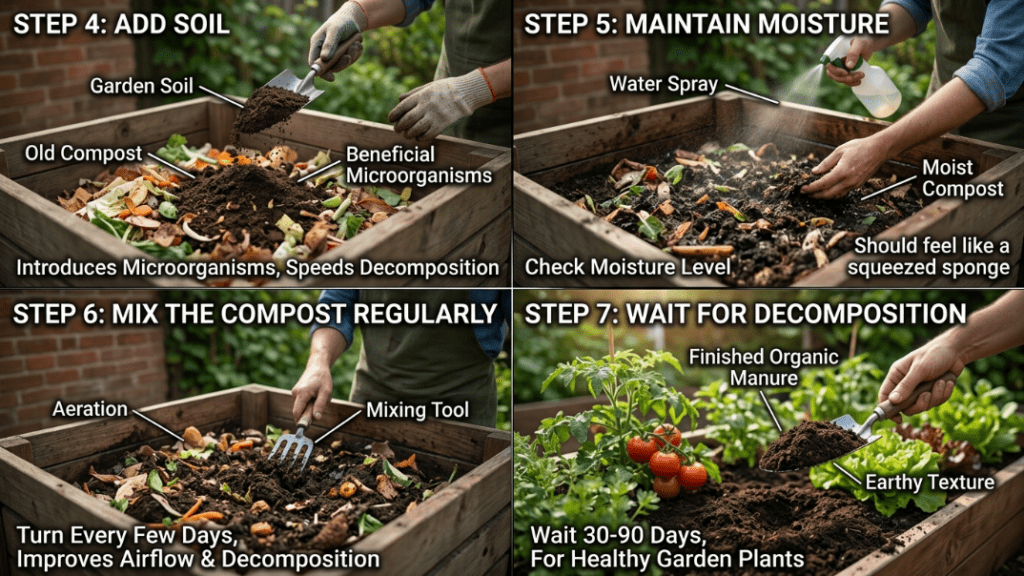
Step 6: Mix the Compost Regularly
Turn or mix the compost every 5–7 days using a small shovel or stick.
Mixing provides oxygen to microorganisms and speeds up decomposition.
Proper aeration also prevents bad odors and pest problems.
Step 7: Wait for Decomposition
Depending on weather and moisture conditions, compost usually takes:
- 30–60 days during summer
- 60–90 days during winter
Over time, kitchen waste slowly turns into dark brown, crumbly organic manure with an earthy smell.
Once the original waste materials are no longer visible, the compost is ready to use.
Signs That Compost is Ready
You can identify finished organic manure through these signs:
- Dark brown color
- Earthy smell
- Crumbly texture
- No visible food scraps
- Cool temperature
Healthy compost should never smell rotten or sour.
How to Use Homemade Organic Manure
Homemade manure can be used for almost all garden plants.
For Potted Plants
Mix compost into the top layer of soil every 20–30 days.
For Vegetable Gardens
Add manure before planting seeds or seedlings.
For Flower Plants
Apply around the root zone for better flowering.
For Indoor Plants
Use small quantities to avoid over-fertilizing.
Regular use improves overall plant growth naturally.
Common Problems During Composting
Beginners often face some common composting issues.
Bad Smell from Compost
Causes
- Excess wet waste
- Poor airflow
- Too much water
Solution
Add dry leaves or newspaper and mix properly.
Presence of Insects
Causes
- Exposed food waste
- Meat or oily food
Solution
Always cover kitchen waste with dry material and keep the lid closed.
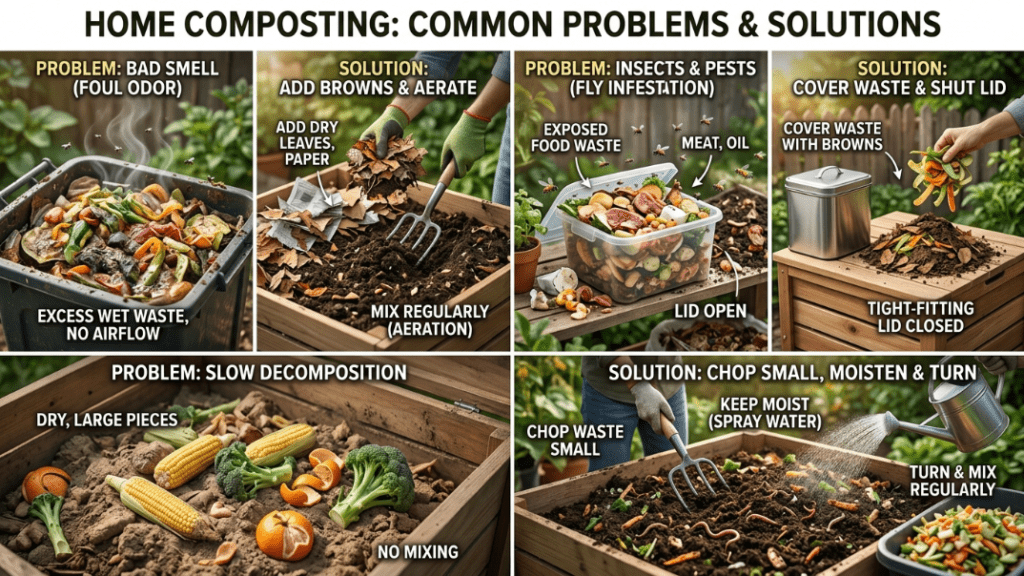
Slow Decomposition
Causes
- Dry compost
- Lack of mixing
- Large waste pieces
Solution
Maintain moisture and mix regularly.
White Fungus in Compost
Small white fungus is usually harmless and indicates active decomposition.
However, excessive fungal growth may occur due to excess moisture.
Reduce watering and improve ventilation if needed.
Expert Tips for Faster Composting
These simple tips help produce organic manure more quickly.
Chop Waste into Small Pieces
Smaller pieces break down faster.
Maintain Wet and Dry Balance
Proper balance prevents odor and speeds decomposition.
Keep Compost in Warm Area
Warm temperatures increase microbial activity.
Turn Compost Frequently
Regular mixing improves oxygen supply.
Avoid Excess Water
Overly wet compost slows decomposition and attracts insects.
Why Organic Manure is Better Than Chemical Fertilizers
At Gardeininplant i believe that Chemical fertilizers provide quick nutrients but may damage soil health over time. Organic manure improves soil naturally and supports long-term fertility.
Advantages of Organic Manure
- Safe for vegetables
- Eco-friendly
- Improves soil microbes
- Long-lasting soil fertility
- Better moisture retention
- Reduces environmental pollution
For sustainable gardening, organic manure is always a healthier choice.
Final Thoughts
Learning how to make organic manure at home from kitchen waste is one of the best steps toward eco-friendly gardening and waste management. Simple kitchen scraps like vegetable peels, tea leaves, fruit waste, and dry leaves can easily be converted into nutrient-rich compost that supports healthy plant growth.
Homemade organic manure improves soil quality, saves money, reduces waste, and helps plants grow naturally without harmful chemicals. With proper layering, moisture control, and regular mixing, anyone can successfully prepare compost at home.
By starting composting today, you not only create healthy fertilizer for your garden but also contribute toward a cleaner and greener environment.