Growing tomatoes at home is one of the easiest and most rewarding gardening activities for beginners. If you want fresh, juicy, and chemical-free tomatoes, learning how to grow tomatoes at home in pots is a perfect option, especially for small spaces like balconies, terraces, or patios. With the right pot, quality soil, proper sunlight, and regular care, tomato plants can grow healthy and produce a large harvest even without a big garden. In this guide, you will learn simple and effective tips to grow tomatoes successfully in pots at home.
Tomatoes are one of the most popular and easiest vegetables to grow at home. Whether you have a small balcony, rooftop, terrace, patio, or even a sunny window, you can successfully grow healthy tomato plants in pots and enjoy fresh, juicy, and chemical-free tomatoes every day. Homegrown tomatoes are tastier, healthier, and more nutritious than store-bought tomatoes because they are harvested fresh and grown naturally.
At Gardeninplant, we believe gardening should be simple and enjoyable for everyone. This detailed guide will help beginners understand every step of growing tomatoes in pots, from choosing seeds to harvesting fresh fruits.
Why Should You Grow Tomatoes in Pots?
Growing tomatoes in pots has become extremely popular, especially among people living in cities and apartments. Many people think gardening requires a large backyard, but tomatoes can grow beautifully in containers with proper care.
Advantages of Growing Tomatoes in Pots
1. Perfect for Small Spaces
Container gardening allows you to grow plants even if you have limited space. A balcony, terrace, staircase area, or sunny corner is enough for tomato plants.
2. Better Control Over Soil
Garden soil sometimes contains pests, weeds, or diseases. In pots, you can prepare healthy nutrient-rich soil specially designed for tomato plants.
3. Easier Plant Maintenance
Watering, fertilizing, pruning, and pest control become easier because the plants are placed in a controlled environment.
4. Fewer Weed Problems
Unlike open gardens, pots usually have very few weeds, which saves time and effort.
5. Fresh Organic Tomatoes at Home
You can grow tomatoes without harmful chemicals and pesticides. Fresh tomatoes directly from the plant taste sweeter and more flavorful.
6. Decorative and Beautiful
Tomato plants also improve the beauty of your balcony or terrace with their green leaves and colorful fruits.
Best Tomato Varieties for Growing in Pots
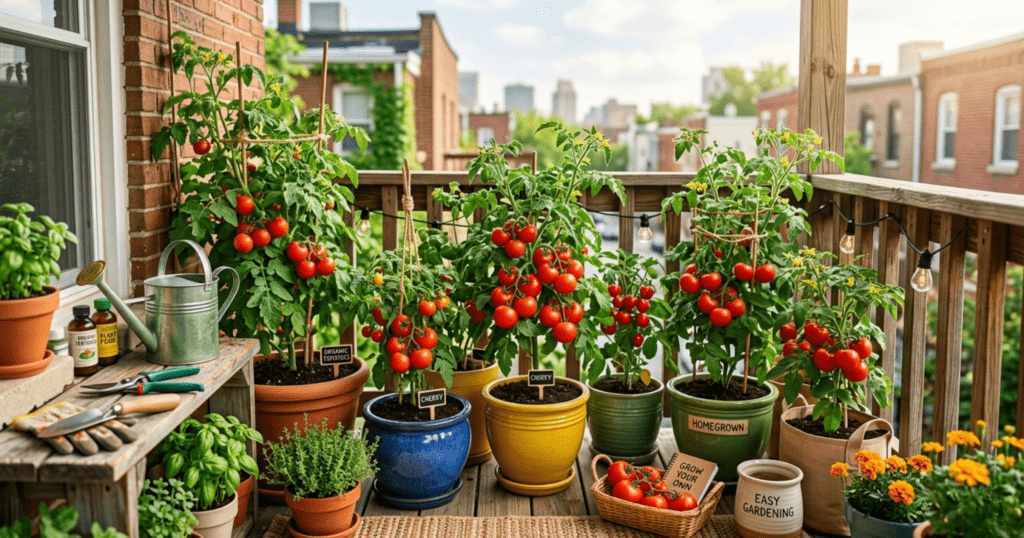
Choosing the right tomato variety is very important because some tomato plants become extremely large and require more space.
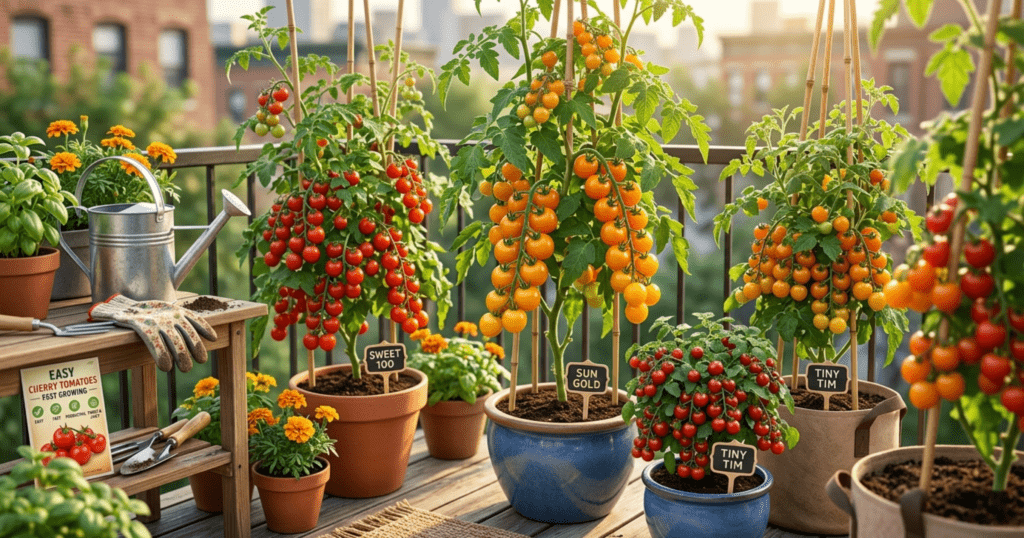
1. Cherry Tomatoes
Cherry tomatoes are the best option for beginners because they are:
- Easy to grow
- Fast growing
- Highly productive
- Sweet and juicy
They produce many small tomatoes continuously for several weeks.
Popular varieties:
- Sweet 100
- Sun Gold
- Tiny Tim
2. Roma Tomatoes
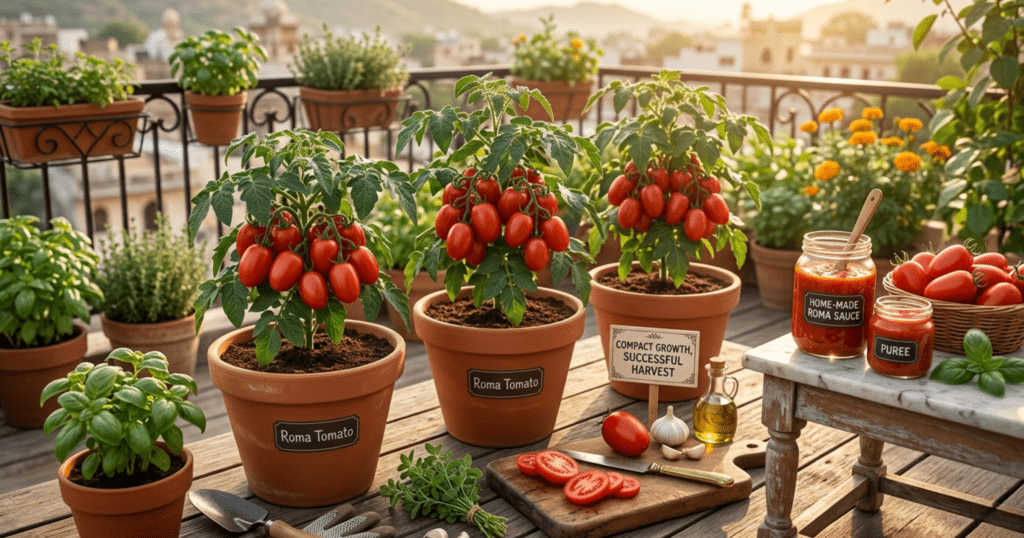
Roma tomatoes are medium-sized tomatoes mainly used for:
- Sauces
- Purees
- Cooking
These plants grow compactly and perform well in containers.
3. Dwarf Tomato Varieties
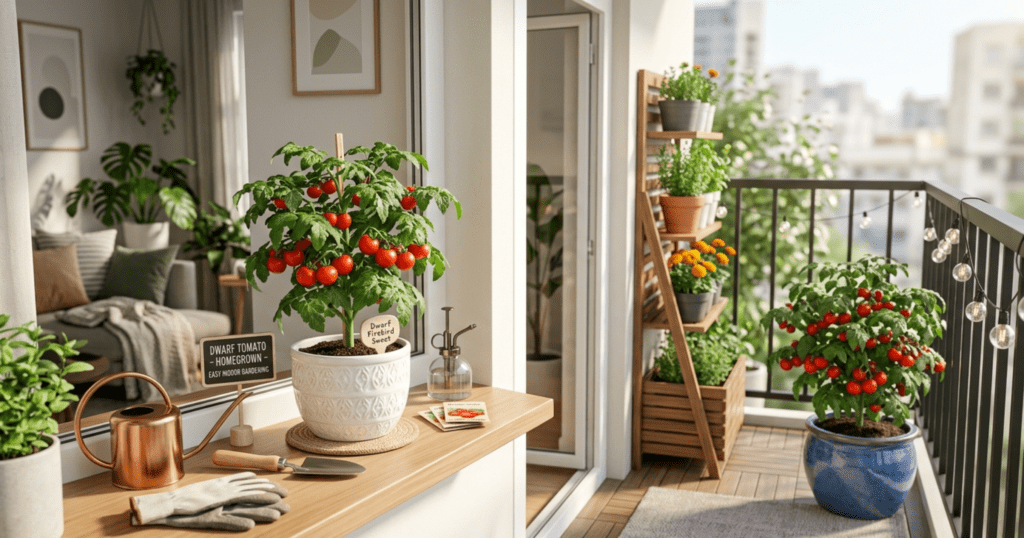
Dwarf tomato plants are specially bred for small spaces. They remain short and manageable while producing a good amount of tomatoes.
They are ideal for:
- Apartments
- Indoor gardening
- Small balconies
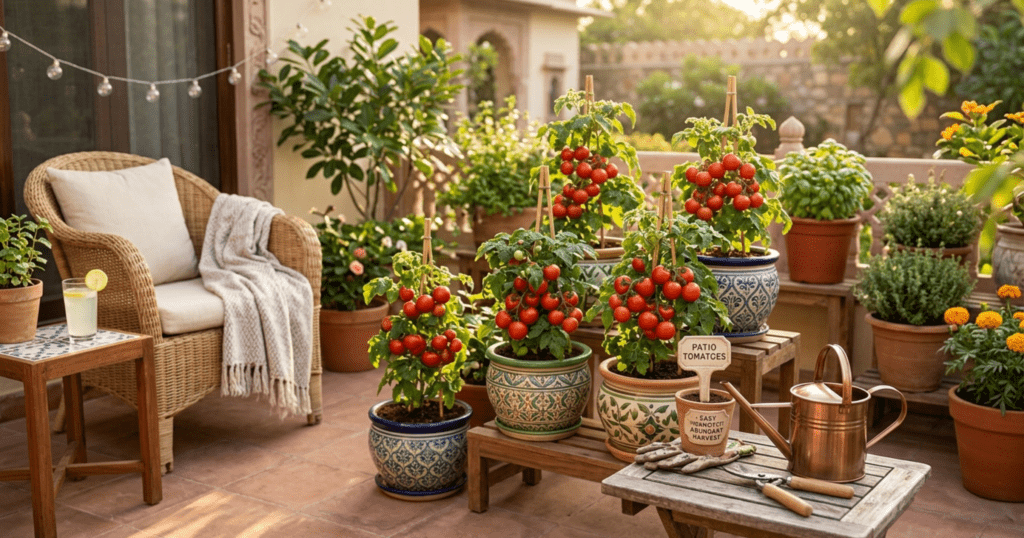
4. Patio Tomatoes
Patio tomato varieties are specifically designed for pot gardening. They require less maintenance and produce fruits even in medium-sized containers.
Essential Things Required for Growing Tomatoes
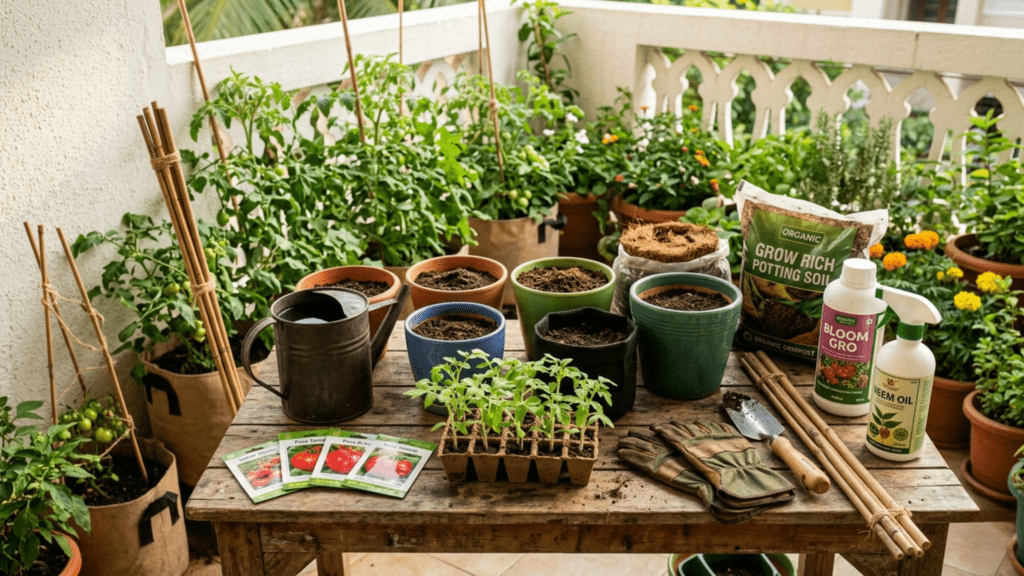
Before planting tomatoes, collect these gardening essentials:
- Tomato seeds or seedlings
- Pots or grow bags
- Potting soil
- Organic compost
- Watering can
- Garden gloves
- Plant support sticks
- Organic fertilizer
- Neem oil spray
Using proper gardening materials helps plants grow faster and healthier.
Choosing the Right Pot for Tomatoes
The container size directly affects tomato plant growth because tomatoes develop deep root systems.
Ideal Pot Size for Tomatoes
The ideal pot should be:
- 12–18 inches deep
- 14–18 inches wide
Larger pots provide:
- Better root growth
- More moisture retention
- Better nutrient absorption
Always grow only one tomato plant per pot for proper growth.
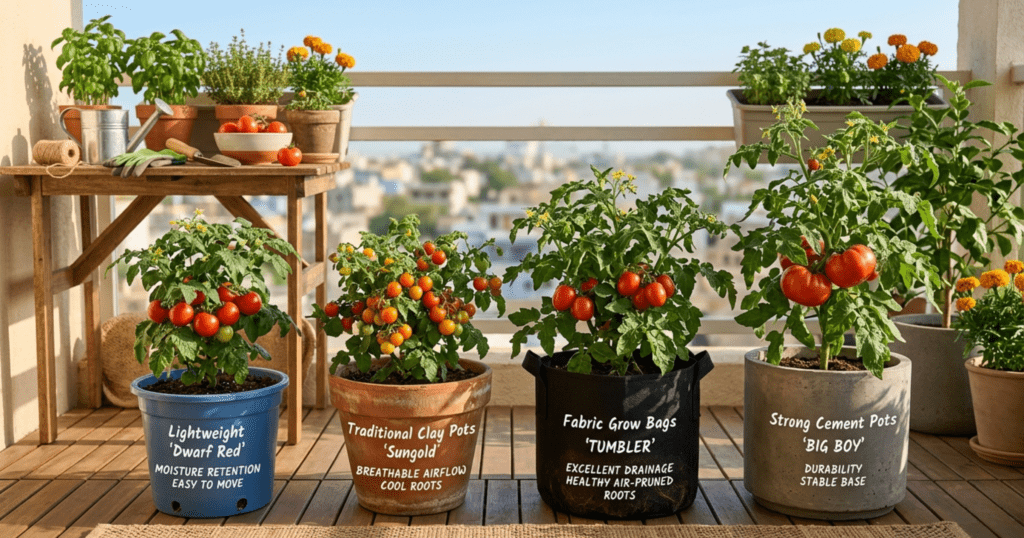
Best Types of Containers
Plastic Pots
- Lightweight
- Affordable
- Retain moisture well
Clay Pots
- Attractive appearance
- Better airflow
- Dry faster in summer
Fabric Grow Bags
- Excellent drainage
- Healthy root development
- Easy to move
Cement Pots
- Strong and durable
- Suitable for terraces
Importance of Drainage Holes
Drainage holes are extremely important because excess water can cause:
- Root rot
- Fungal infections
- Plant death
Always ensure your container has 3–5 drainage holes.
Preparing the Best Soil for Tomato Plants
Healthy soil is the foundation of successful gardening.
Tomatoes need soil that is:
- Loose
- Nutrient-rich
- Well-draining
- Moisture-retaining
Best Potting Mix for Tomatoes
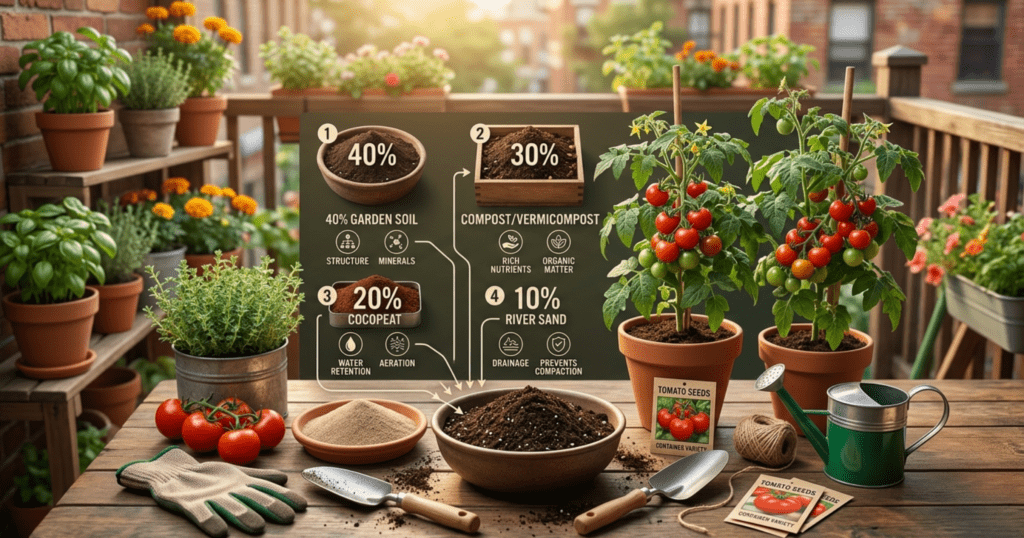
Prepare this ideal mixture:
- 40% garden soil
- 30% compost or vermicompost
- 20% cocopeat
- 10% river sand
Benefits of Each Ingredient
Garden Soil
Provides natural minerals and structure.
Compost
Supplies nutrients for plant growth.
Cocopeat
Improves water retention and aeration.
Sand
Improves drainage and prevents waterlogging.
Soil pH for Tomatoes
Tomatoes grow best in slightly acidic soil with a pH between 6.0 and 6.8.
Improper pH levels can reduce nutrient absorption and slow plant growth.
How to Grow Tomatoes from Seeds
Growing tomatoes from seeds is affordable and satisfying.
Step 1: Fill the Pot
Fill your container with prepared potting mix while leaving about 2 inches of space at the top.
Step 2: Sow the Seeds
Plant seeds:
- About ¼ inch deep
- 2–3 inches apart
Cover lightly with soil.
Step 3: Water Carefully
Use a spray bottle or light watering can to avoid disturbing seeds.
Keep the soil:
- Moist
- Not waterlogged
Step 4: Provide Warmth and Sunlight
Tomato seeds germinate best in warm temperatures between 20–30°C.
Seeds usually sprout within:
- 5–10 days
Transplanting Tomato Seedlings
If seedlings are grown in trays, transplant them when they reach:
- 4–6 inches in height
- 4–5 true leaves
How to Transplant Properly
1. Water Before Transplanting
Moist soil reduces transplant shock.
2. Remove Carefully
Do not damage roots while removing seedlings.
3. Plant Deeply
Tomato stems can grow additional roots underground, making the plant stronger.
4. Water Immediately
This helps the roots settle quickly.
Sunlight Requirements for Tomato Plants
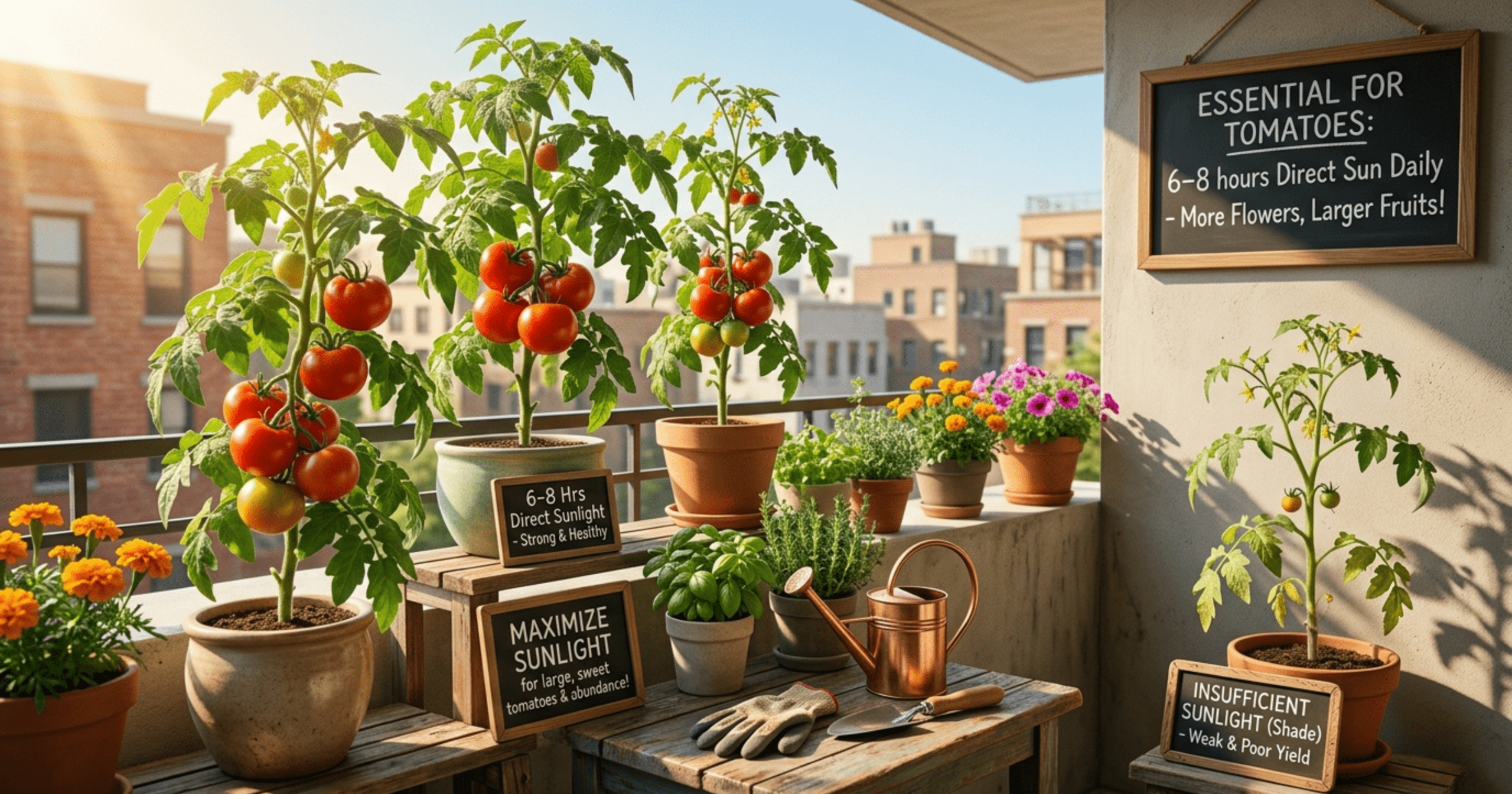
Tomatoes are sun-loving plants. This is the main step if you are planning to grow tomatoes at home in pots
Ideal Sunlight Duration
Tomatoes require:
- 6–8 hours of direct sunlight daily
Without enough sunlight:
- Plants become weak
- Flower production decreases
- Fruits remain small and sour
Best Locations for Tomato Pots
Ideal places include:
- Balconies
- Rooftops
- Terraces
- South-facing windows
Rotate pots occasionally for even growth.
Watering Tomato Plants Properly
Watering mistakes are one of the biggest reasons tomato plants fail.
Correct Watering Method
Water Deeply
Water until excess water comes out of drainage holes.
Keep Soil Moist
The soil should remain slightly moist but never soggy.
Morning Watering is Best
Morning watering allows plants to absorb moisture before afternoon heat.
Problems Caused by Overwatering
- Yellow leaves
- Fungal diseases
- Root rot
- Weak roots
Problems Caused by Underwatering
- Drooping leaves
- Dry soil
- Cracked fruits
- Blossom drop
Fertilizing Tomato Plants
Tomatoes need continuous nutrition because they are heavy feeders.
Best Organic Fertilizers
Vermicompost
Rich in natural nutrients and improves soil quality.
Cow Dung Compost
Provides slow-release nutrients.
Banana Peel Fertilizer
High in potassium which improves flowering and fruiting.
Mustard Cake Fertilizer
Boosts plant growth naturally.
Seaweed Extract
Improves plant immunity and root development.
Fertilizer Schedule
- Add compost every 15–20 days
- Use liquid fertilizer during flowering
- Reduce nitrogen during fruiting stage
Too much nitrogen causes excessive leaf growth instead of tomatoes.
Supporting Tomato Plants
As tomato plants grow taller, they require support.
Best Support Options
Bamboo Stakes
Simple and inexpensive.
Tomato Cages
Provide excellent support for bushy plants.
Trellis System
Suitable for larger varieties.
Tie stems gently using soft cloth or garden ties.
Proper support:
- Prevents stem breakage
- Improves airflow
- Keeps fruits clean
Common Problems in Tomato Plants
1. Yellow Leaves
Possible causes:
- Overwatering
- Nutrient deficiency
- Poor drainage
Solution:
- Improve drainage
- Reduce watering
- Add balanced fertilizer
2. Flower Drop
Causes:
- Extreme temperatures
- Inconsistent watering
- Lack of pollination
3. Pest Attacks
Common pests:
- Aphids
- Whiteflies
- Spider mites
- Caterpillars
Use neem oil spray weekly for natural pest control.
4. Blossom End Rot
This creates black spots at the bottom of tomatoes.
Main causes:
- Calcium deficiency
- Irregular watering
Solution:
- Maintain consistent watering
- Add calcium-rich compost
Harvesting Tomatoes
Tomatoes are ready for harvesting when:
- They become fully colored
- Slightly soft when pressed
Harvesting Tips
- Twist gently while picking
- Use scissors if needed
- Harvest regularly to encourage more fruits
Freshly harvested tomatoes taste far better than market tomatoes.
Tips to Increase Tomato Production
Want more tomatoes from each plant? Follow these expert tips:
- Use large containers
- Provide maximum sunlight
- Water consistently
- Add compost regularly
- Prune unnecessary leaves
- Support plants properly
- Remove diseased leaves immediately
Healthy plants produce more flowers and fruits continuously.
How to Grow Tomatoes at Home in Pots Indoors
Yes, tomatoes can grow indoors if enough sunlight is available.
Indoor Growing Tips
- Place near sunny windows
- Use grow lights if necessary
- Choose dwarf varieties
- Ensure proper airflow
Indoor plants may produce fewer fruits than outdoor plants but still grow successfully.
Health Benefits of Tomatoes
Tomatoes are highly nutritious and rich in:
- Vitamin C
- Vitamin A
- Potassium
- Lycopene antioxidants
Regular tomato consumption helps:
- Improve immunity
- Support heart health
- Improve skin health
Final Thoughts on How to Grow Tomatoes at Home in Pots
Growing tomatoes at home in pots is one of the best ways to begin your gardening journey. Tomato plants are productive, beautiful, and rewarding. With the right pot, healthy soil, sunlight, watering, and fertilizers, anyone can grow delicious tomatoes even in small urban spaces.
At Gardeninplant, we encourage everyone to start home gardening and enjoy fresh organic produce directly from their own plants. Even a single tomato plant can bring freshness, satisfaction, and happiness to your home garden.
Start planting today and enjoy the joy of harvesting your own tomatoes naturally.
In conclusion, learning how to grow tomatoes at home in pots is simple, affordable, and perfect for anyone who loves fresh homegrown vegetables. By choosing the right container, providing enough sunlight, watering properly, and using nutrient-rich soil, you can enjoy healthy tomato plants with a great harvest throughout the season. Whether you are a beginner or an experienced gardener, understanding how to grow tomatoes at home in pots can help you grow delicious and organic tomatoes even in small spaces like balconies or terraces.