Indoor plants are one of the best ways to make your home look fresh, beautiful, and peaceful. They improve air quality, reduce stress, and add natural beauty to every corner of the house. However, many people buy indoor plants but struggle to keep them healthy because they do not understand their basic care requirements.
Indoor plants need proper light, water, soil, humidity, nutrients, and regular maintenance to grow successfully. Once you understand these simple plant care basics, maintaining indoor plants becomes easy and enjoyable.
In this detailed guide, you will learn step-by-step how to care for indoor plants properly.
Choose the Right Indoor Plants
The first and most important step is choosing the right indoor plants for your home environment. Different plants have different needs. Some plants require bright sunlight, while others grow well in low-light rooms.
If you are a beginner, it is better to start with low-maintenance plants because they are easier to care for and can survive small mistakes.
Best Indoor Plants for Beginners
Snake Plant
Snake plants are one of the easiest indoor plants to grow. They survive in low light, require less water, and improve indoor air quality.
Money Plant
Money plants grow quickly and need very little maintenance. They can grow in both soil and water.
Spider Plant
Spider plants are beautiful hanging plants that grow well indoors and require moderate watering.
Aloe Vera
Aloe vera needs bright sunlight and less water. It is also useful for skincare and minor burns.
Pothos
Pothos plants are excellent for beginners because they can tolerate low light and irregular watering.
Choosing beginner-friendly plants helps build confidence and gardening experience.
Understand Indoor Plant Light Requirements
Light is one of the most important factors for healthy indoor plants. Plants use sunlight to prepare food through photosynthesis. Without enough light, plants become weak, pale, and unhealthy.
Different indoor plants need different amounts of sunlight.
Types of Light for Indoor Plants
Bright Direct Light
Bright direct light means sunlight directly falls on the plant for several hours every day. Plants placed near south-facing windows usually receive direct sunlight.
Plants that love direct sunlight include:
- Succulents
- Aloe Vera
- Cactus
- Jade Plant
Too little sunlight can stop their growth.
Bright Indirect Light
Bright indirect light means sunlight enters the room but does not directly hit the plant. This is the best lighting condition for many indoor plants.
Plants that prefer indirect sunlight:
- Monstera
- Peace Lily
- Pothos
- Philodendron
You can place these plants near windows with curtains.
Low Light
Some indoor plants can survive in rooms with limited natural light.
Low-light plants include:
- Snake Plant
- ZZ Plant
- Cast Iron Plant
These plants are ideal for bedrooms, offices, and bathrooms.
Signs Your Plant Needs More Light
- Yellow leaves
- Weak stems
- Slow growth
- Small leaves
- Leaning toward windows
Signs of Too Much Light
- Burnt leaf edges
- Brown spots
- Dry leaves
Understanding lighting conditions helps plants grow faster and healthier.
Water Indoor Plants Properly
Watering is one of the most important parts of indoor plant care. Most indoor plants die because of overwatering rather than underwatering.
Many beginners water plants daily without checking the soil, which damages roots and causes root rot.
How Often Should You Water Indoor Plants?
There is no fixed watering schedule because every plant has different water needs.
Watering depends on:
- Plant type
- Pot size
- Weather
- Humidity
- Season
- Soil type
For example:
- Succulents need less water
- Tropical plants need more moisture
Best Watering Tips
Check Soil Before Watering
Insert your finger into the top soil. If the soil feels dry, then water the plant.
Water Slowly
Pour water slowly until excess water drains from the bottom holes.
Use Drainage Pots
Always use pots with drainage holes to avoid water accumulation.
Water in Morning
Morning watering allows plants to absorb moisture properly.
Avoid Wet Leaves
Wet leaves may attract fungal diseases.
Signs of Overwatering
- Yellow leaves
- Mushy stems
- Bad smell from soil
- Fungus growth
- Drooping leaves
Signs of Underwatering
- Dry soil
- Brown leaf edges
- Wilting leaves
- Crispy leaves
Learning proper watering techniques is essential for healthy indoor plants.
Use Good Quality Soil
Soil plays an important role in plant growth because it supplies nutrients, water, and oxygen to roots.
Indoor plants need lightweight and well-draining soil.
Heavy soil blocks airflow and keeps too much water, which damages roots.
Ideal Potting Mix for Indoor Plants
A good indoor potting mix usually contains:
Coco Peat
Retains moisture and keeps soil soft.
Compost
Provides nutrients for healthy growth.
Perlite or Sand
Improves drainage and airflow.
Garden Soil
Adds structure to the mix.
Using balanced potting mix improves root health and plant growth.
Choose the Right Pot
The type and size of pot affect plant growth.
A good pot should allow proper drainage and enough root space.
Types of Pots for Indoor Plants
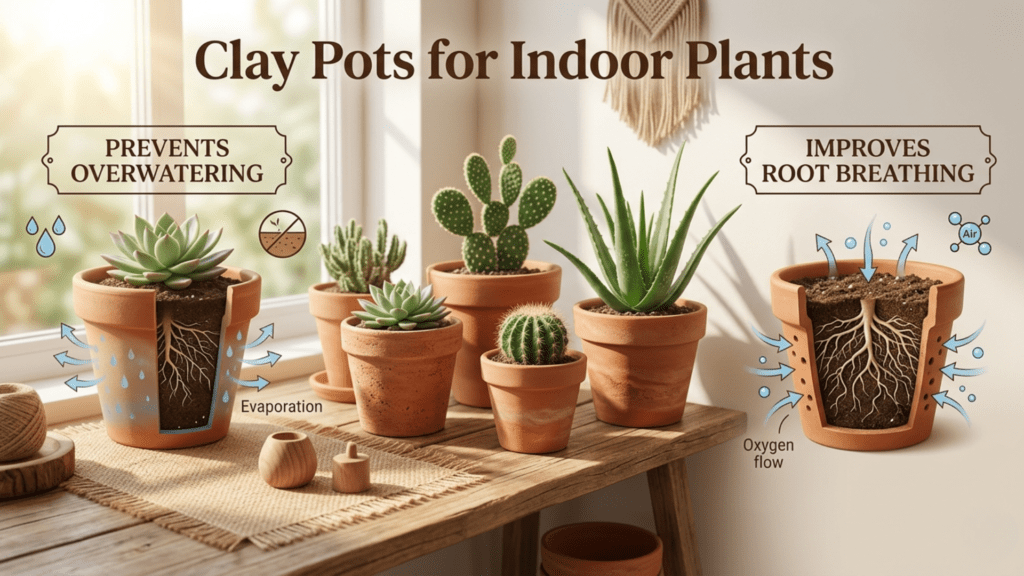
Clay Pots
Clay pots allow airflow and dry faster. They are perfect for succulents and cactus.
Benefits:
- Prevent overwatering
- Improve root breathing
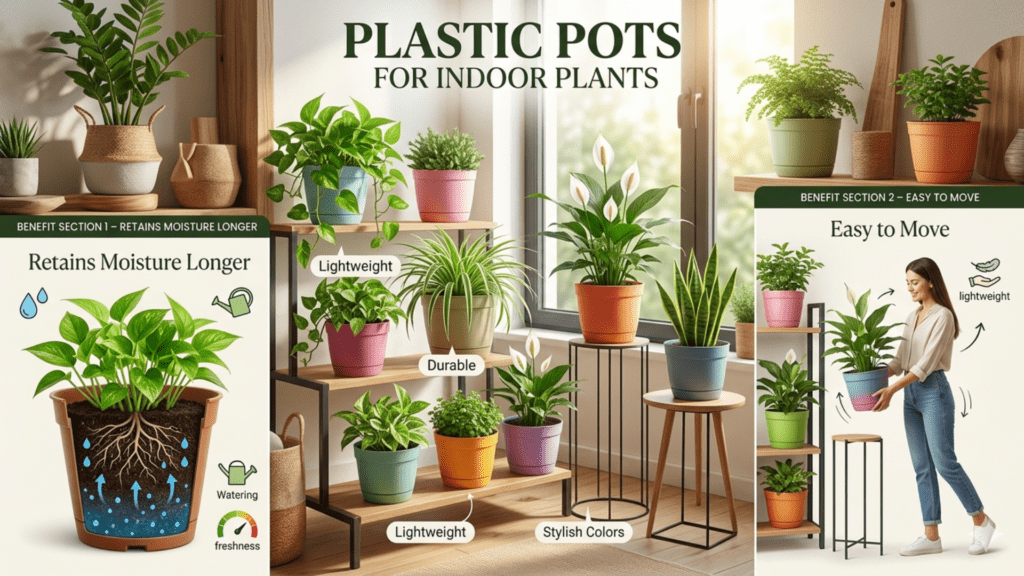
Plastic Pots
Plastic pots are lightweight and budget-friendly.
Benefits:
- Retain moisture longer
- Easy to move
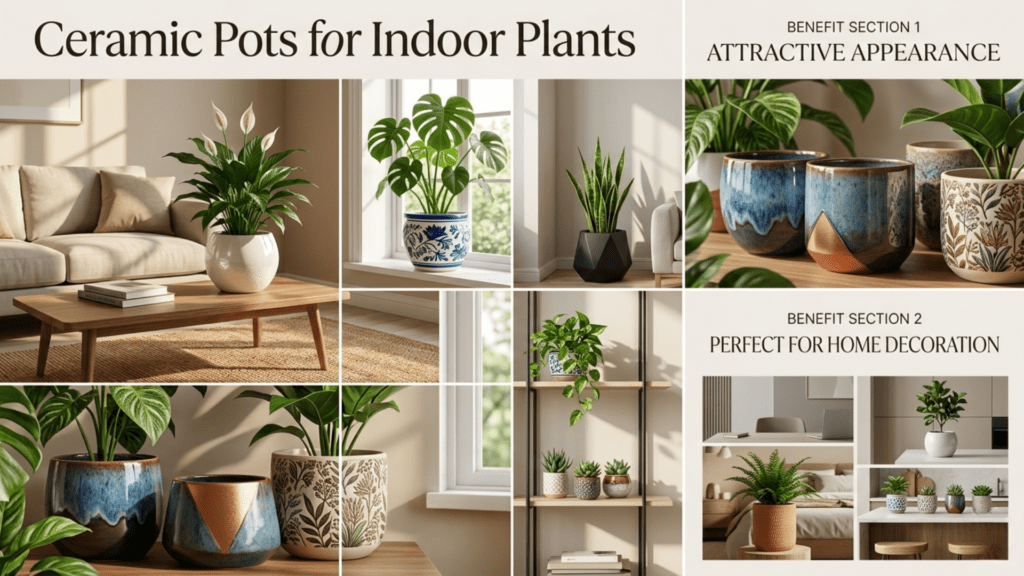
Ceramic Pots
Ceramic pots are decorative and stylish.
Benefits:
- Attractive appearance
- Suitable for home decoration
Pot Selection Tips
- Always choose pots with drainage holes
- Avoid very large pots
- Repot plants when roots become crowded
Proper pots help prevent root problems.
Maintain Proper Humidity
Many indoor plants are tropical plants that naturally grow in humid environments.
Dry indoor air can damage leaves and slow plant growth.
Signs of Low Humidity
- Brown leaf edges
- Curling leaves
- Dry tips
Ways to Increase Humidity
Mist the Leaves
Spraying water lightly on leaves increases humidity.
Use a Humidity Tray
Place stones and water under pots.
Group Plants Together
Plants naturally increase surrounding humidity.
Use a Humidifier
Humidifiers are excellent for tropical indoor plants.
Humidity-loving plants include:
- Ferns
- Peace Lily
- Calathea
Fertilize Indoor Plants Regularly
Indoor plants need nutrients to stay healthy and green. Since nutrients in pots get used over time, fertilizers become necessary.
Fertilizers provide important nutrients like:
- Nitrogen
- Phosphorus
- Potassium
These nutrients support leaf growth, roots, and flowering.
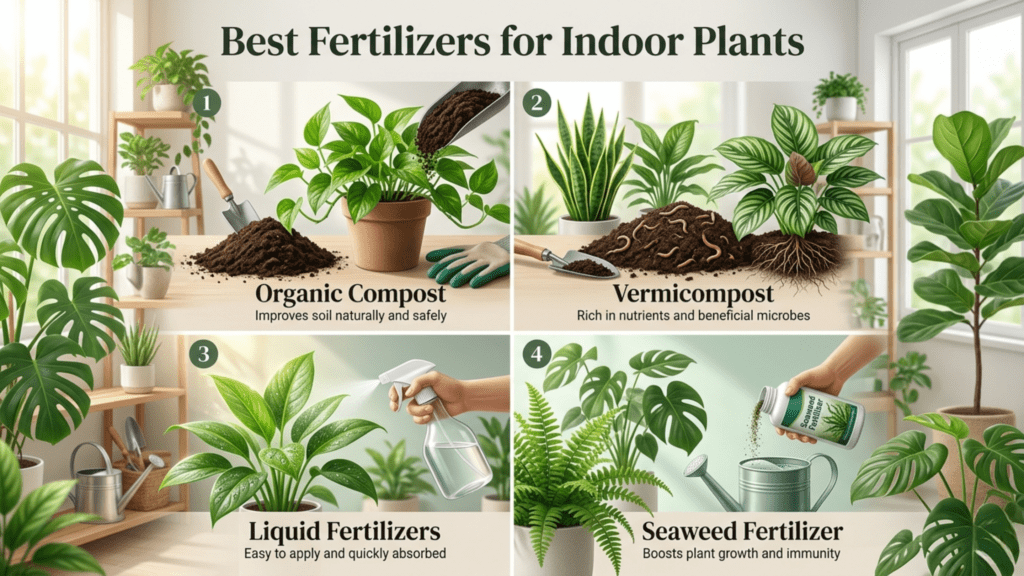
Best Fertilizers for Indoor Plants
Organic Compost
Improves soil naturally and safely.
Vermicompost
Rich in nutrients and beneficial microbes.
Liquid Fertilizers
Easy to apply and quickly absorbed.
Seaweed Fertilizer
Boosts plant growth and immunity.
Fertilizing Tips
- Fertilize during growing season
- Avoid excessive fertilizer
- Follow instructions carefully
- Reduce feeding during winter
Over-fertilizing can burn roots and damage plants.
Clean Indoor Plants Regularly
Dust often collects on indoor plant leaves. Dirty leaves block sunlight and reduce photosynthesis.
Cleaning plants keeps them healthy and shiny.
How to Clean Indoor Plants
Wipe Leaves
Use a soft damp cloth to remove dust.
Wash Small Plants
Rinse gently under water occasionally.
Remove Dead Leaves
Trim yellow or damaged leaves regularly.
Benefits of Cleaning Plants
- Better sunlight absorption
- Improved appearance
- Reduced pests
- Healthier growth
Clean plants grow faster and look more attractive.
Prune Indoor Plants
Pruning means trimming unnecessary parts of plants.
Regular pruning helps plants grow bushier and healthier.
Benefits of Pruning
- Encourages new growth
- Removes dead leaves
- Improves airflow
- Prevents disease spread
Pruning Tips
- Use clean scissors
- Cut dead stems carefully
- Remove yellow leaves immediately
Pruning keeps plants neat and healthy.
Protect Indoor Plants from Pests
Indoor plants can sometimes get attacked by insects and pests.
Common indoor plant pests include:
- Spider mites
- Aphids
- Mealybugs
- Fungus gnats
Pests weaken plants and damage leaves.
Natural Pest Control Methods
Neem Oil Spray
Neem oil naturally kills many insects.
Soap Water Spray
Mild soap solution helps remove pests.
Keep Plants Clean
Healthy plants attract fewer pests.
Isolate Infected Plants
Separate infected plants to stop pest spread.
Check plants weekly for early pest detection.
Repot Indoor Plants
As plants grow, their roots need more space. Repotting gives plants fresh soil and larger containers.
Signs Your Plant Needs Repotting
- Roots coming out of drainage holes
- Water dries quickly
- Slow growth
- Plant becomes unstable
Steps to Repot Indoor Plants
- Choose a slightly larger pot
- Remove plant carefully
- Loosen roots gently
- Add fresh potting mix
- Place plant in new pot
- Water lightly
Repotting refreshes plant growth and root health.
Seasonal Care for Indoor Plants
Indoor plant care changes with seasons.
Summer Plant Care
During summer:
- Plants need more water
- Increase humidity
- Protect from harsh afternoon sunlight
Winter Plant Care
During winter:
- Reduce watering
- Avoid cold air exposure
- Stop excessive fertilizing
Plants grow slower during winter months.
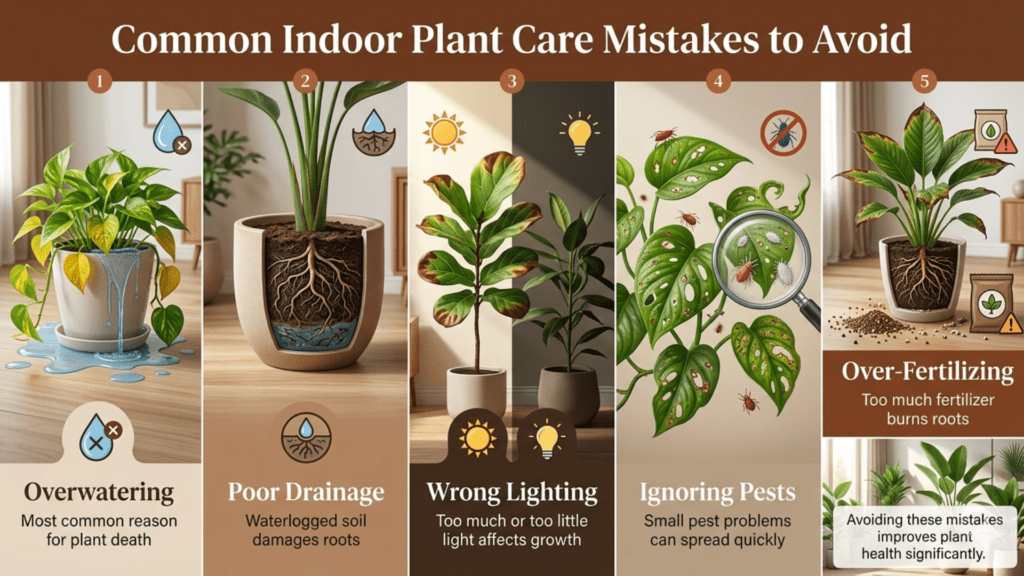
Common Indoor Plant Care Mistakes
Many beginners make simple mistakes that damage plants.
Common Mistakes to Avoid
Overwatering
Most common reason for plant death.
Poor Drainage
Waterlogged soil damages roots.
Wrong Lighting
Too much or too little light affects growth.
Ignoring Pests
Small pest problems can spread quickly.
Over-Fertilizing
Too much fertilizer burns roots.
Avoiding these mistakes improves plant health significantly.
Simple Indoor Plant Care Routine
Following a regular routine keeps indoor plants healthy.
Daily Routine
- Check leaves
- Observe soil moisture
- Remove fallen leaves
Weekly Routine
- Water plants if needed
- Clean leaves
- Rotate pots for even growth
Monthly Routine
- Fertilize lightly
- Inspect for pests
- Trim dead leaves
Consistency is the secret to healthy indoor plants.
Final Thoughts
Indoor plants can transform your home into a fresh and relaxing space. Caring for indoor plants becomes easy once you understand their basic needs like light, water, soil, humidity, and nutrients.
Start with easy-care plants if you are a beginner and slowly learn how each plant behaves. With regular care and patience, your indoor plants will stay green, healthy, and beautiful throughout the year.
Indoor gardening is not just a hobby — it is a wonderful way to connect with nature and create a peaceful environment inside your home.