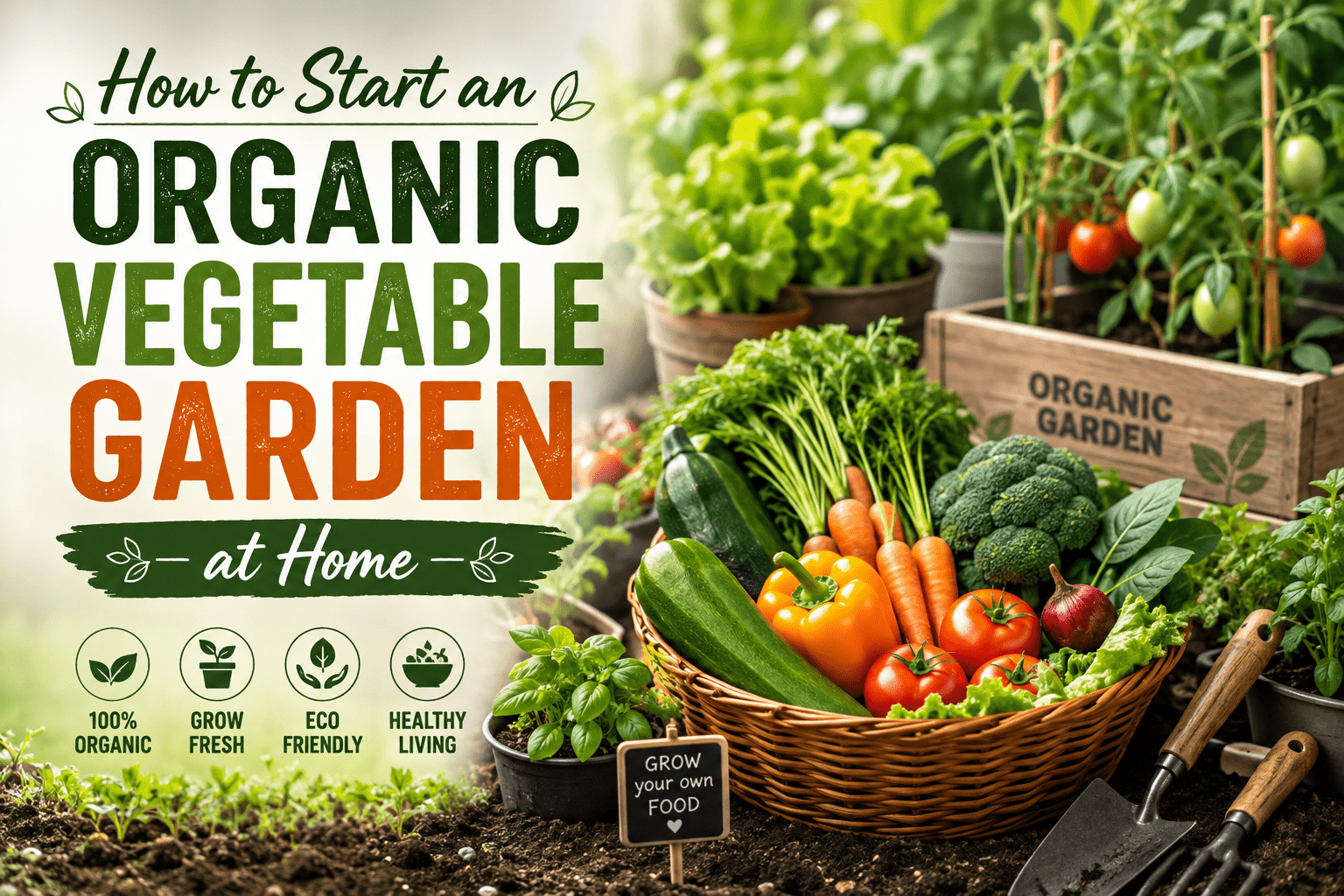
Want to enjoy fresh, healthy, and chemical-free vegetables right from your home? How to Start an Organic Vegetable Garden at Home is easier than you might think. With the right location, healthy soil, quality seeds, proper watering, and regular care, you can grow delicious organic vegetables even in a small garden or balcony. This guide will help you start your own organic vegetable garden step by step.
Growing your own vegetables at home is a simple and rewarding way to enjoy fresh, healthy, and chemical-free food. You don’t need a large garden—even a balcony, terrace, or small backyard can be used to grow an organic vegetable garden.
In this guide, you’ll learn how to start an organic vegetable garden at home, choose the right plants, prepare the soil, use natural fertilizers, and protect your plants naturally.
What Is an Organic Vegetable Garden?
An organic vegetable garden is a garden where vegetables are grown without synthetic chemical fertilizers, pesticides, or harmful chemicals. Instead, organic gardening focuses on healthy soil, compost, natural fertilizers, and environmentally friendly pest-control methods.
Organic gardening can help improve soil quality while providing fresh vegetables for your family.
Benefits of Growing an Organic Vegetable Garden
Starting an organic vegetable garden at home has many benefits:
- Provides fresh vegetables at home
- Helps reduce exposure to unnecessary chemicals
- Saves money on some vegetables
- Improves soil health
- Reduces kitchen and garden waste through composting
- Makes gardening an enjoyable hobby
- Supports a healthier and more environmentally friendly lifestyle
1. Choose the Right Location
The first step is to choose a suitable location for your vegetable garden.
Most vegetables need around 6–8 hours of sunlight per day for healthy growth. Select an area that receives plenty of sunlight and has good air circulation.
If you don’t have a backyard, you can grow vegetables in:
- Pots
- Grow bags
- Containers
- Balcony planters
- Terrace gardens
- Wooden or raised garden beds
2. Decide Which Vegetables to Grow
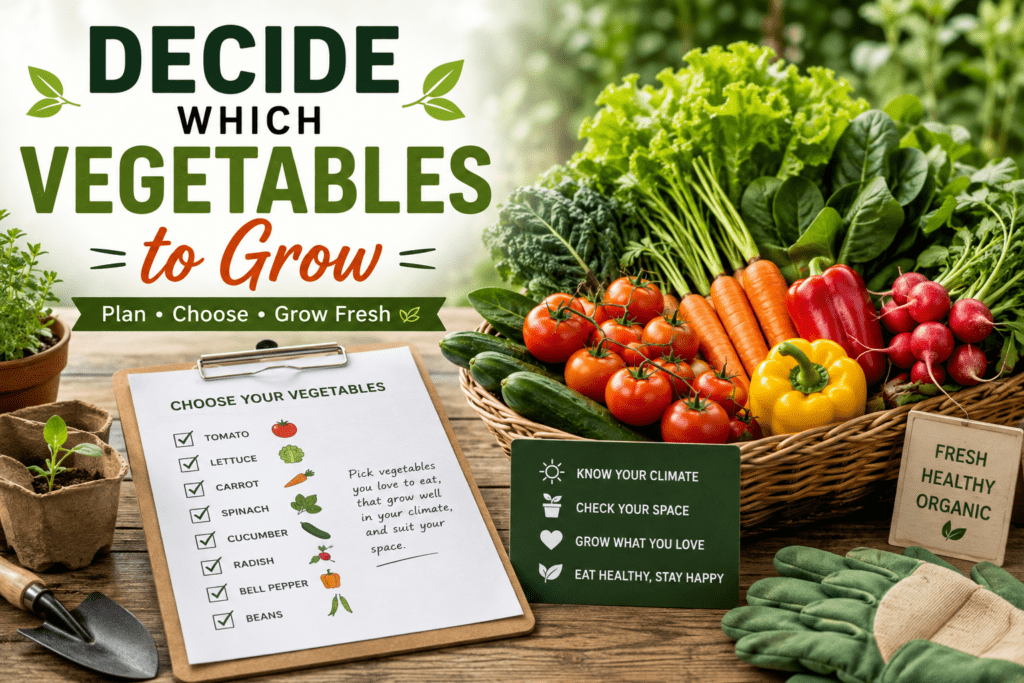
If you’re a beginner, start with vegetables that are relatively easy to grow.
Some good options include:
- Tomato
- Green chili
- Coriander
- Spinach
- Radish
- Carrot
- Okra
- Beans
- Cucumber
- Lettuce
Choose vegetables according to your local climate and the season in which you are planting.
3. Prepare Healthy Organic Soil
Healthy soil is one of the most important parts of organic gardening.
You can improve your soil by adding organic materials such as:
- Homemade compost
- Well-decomposed farmyard manure
- Vermicompost
- Leaf compost
- Cocopeat
Mix the organic matter into the soil before planting. Good soil should be loose, fertile, and able to drain excess water.
Checkout to – Benefits of Organic Plants
4. Use Organic Seeds or Healthy Seedlings
Choose good-quality seeds or healthy seedlings from a reliable source.
Before planting, check the seed packet for information about the recommended season, planting depth, and spacing.
For beginners, seedlings can sometimes be easier to manage than starting every vegetable from seed.
5. Plant Your Vegetables Properly
Follow the recommended spacing for each vegetable. Crowding plants can reduce air circulation and make it harder for plants to receive enough sunlight.
Plant seeds at the appropriate depth and gently cover them with soil. After planting, water the soil carefully without washing away the seeds.
6. Water Your Plants Correctly
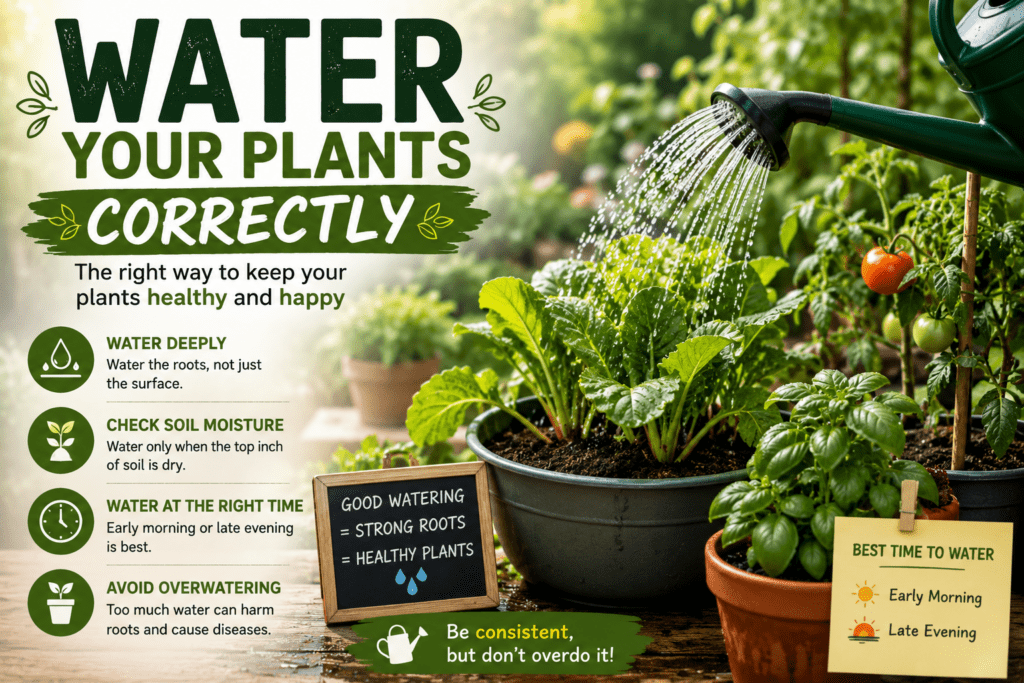
Proper watering is essential for healthy vegetable plants.
Water your garden when the soil begins to dry rather than following a fixed schedule every day. Early morning is generally a good time to water because it allows foliage to dry during the day.
Avoid overwatering because constantly wet soil can cause root problems.
7. Make Natural Fertilizer at Home
Organic gardening doesn’t require expensive fertilizers.
You can make compost using suitable kitchen and garden waste such as:
- Vegetable and fruit scraps
- Dry leaves
- Grass clippings
- Plant material
Avoid adding meat, dairy products, oily foods, or diseased plant material to a basic home compost pile.
Finished compost can be mixed into the soil or used around established plants.
8. Protect Plants Naturally From Pests
Pests are common in vegetable gardens, but you can use several natural approaches to manage them.
Regularly inspect the leaves and stems for insects or signs of damage. Remove larger pests by hand when practical and keep the garden clean.
You can also encourage beneficial insects by growing flowers and maintaining plant diversity.
For serious pest problems, use an appropriate organic gardening treatment according to its label directions.
9. Use Mulch Around Plants
Adding a layer of organic mulch around plants can help conserve soil moisture, reduce weeds, and protect the soil surface.
Suitable mulch materials can include:
- Dry leaves
- Straw
- Grass clippings
- Compost
Keep mulch slightly away from the main stem of the plant to reduce the risk of excessive moisture around the stem.
10. Remove Weeds Regularly
Weeds compete with vegetables for water, nutrients, sunlight, and space.
Check your garden regularly and remove weeds while they are still small. Mulching can also help reduce weed growth.
Avoid allowing weeds to produce seeds, as this can make future weed control more difficult.
11. Harvest Vegetables at the Right Time
Harvesting vegetables at the appropriate stage can encourage continued production for many crops.
For example, leafy vegetables can often be harvested gradually, while vegetables such as tomatoes, cucumbers, beans, and okra should be harvested according to their recommended maturity stage.
Use clean gardening scissors or a knife when necessary to avoid damaging the plant.
Common Mistakes to Avoid
Beginners often make a few simple mistakes when starting an organic vegetable garden.
Overwatering
Too much water can damage roots and encourage plant diseases.
Poor Sunlight
Most vegetables need plenty of sunlight, so avoid planting them in heavily shaded areas.
Too Many Plants
Planting too many vegetables in a small space can create overcrowding and poor air circulation.
Using Fresh Manure
Fresh animal manure can be too strong for plants. Use properly composted or well-decomposed manure instead.
Ignoring Pests
Check plants regularly so that pest problems can be identified early.
Final Thoughts
Starting an organic vegetable garden at home doesn’t have to be difficult. Begin with a few easy-to-grow vegetables, provide healthy soil and adequate sunlight, water carefully, and use compost and other natural gardening practices.
With regular care and patience, even a small balcony, terrace, or backyard can become a productive home vegetable garden. Growing your own organic vegetables can be both enjoyable and rewarding while helping you make better use of your available space.
Frequently Asked Questions
1. Can I grow an organic vegetable garden without a backyard?
Yes. You can grow many vegetables in pots, containers, grow bags, balconies, and terraces.
2. What are the easiest vegetables for beginners?
Tomatoes, spinach, radish, coriander, green chili, beans, and okra are some options that can be suitable for beginners, depending on the season and local climate.
3. What fertilizer is best for an organic vegetable garden?
Well-made compost and properly decomposed organic manure are common choices for improving soil fertility.
4. How much sunlight do vegetables need?
Many common vegetables grow best with around 6–8 hours of direct sunlight per day, although requirements vary by plant.
5. How often should I water an organic vegetable garden?
Water according to soil moisture and weather conditions. Check the soil regularly and avoid keeping it constantly waterlogged.