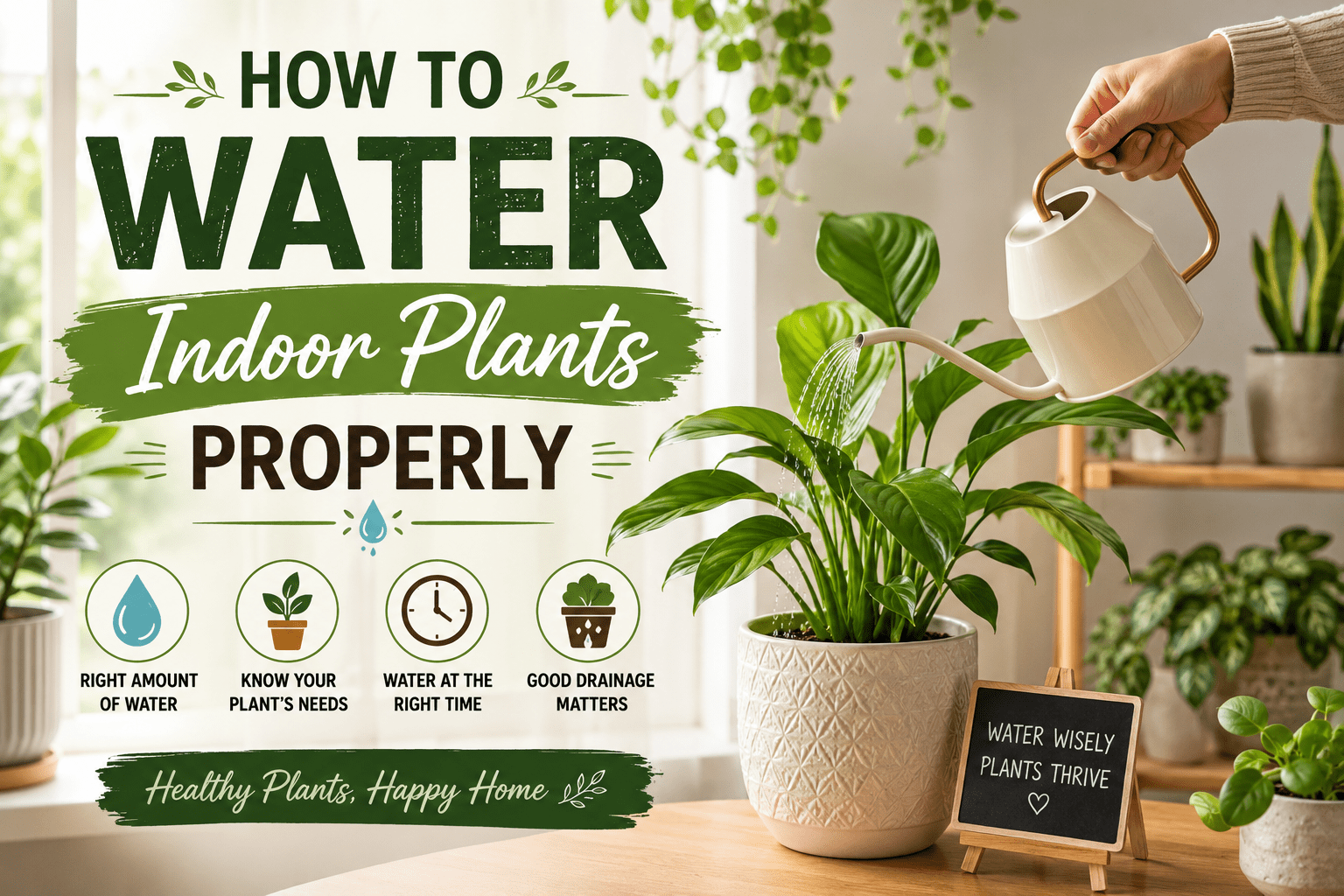
When I first started growing indoor plants, I honestly believed watering them was the easiest part of plant care. I used to water every plant almost daily because I thought more water meant faster growth and healthier leaves. But after a few weeks, some plants started developing yellow leaves, soggy soil, and weak stems. That experience taught me an important lesson — learning how to water indoor plants properly is one of the biggest secrets behind healthy and thriving indoor plants.
Indoor plants behave differently from outdoor plants because they grow in controlled environments with limited sunlight, airflow, and slower soil drying. Because of this, watering indoor plants correctly becomes even more important. Too much water can cause root rot, while too little water can make leaves dry and weak.
Over time, I learned simple watering habits that completely changed the health of my indoor garden. In this detailed guide, I’ll share everything I personally learned about watering indoor plants properly, including watering techniques, common mistakes, seasonal tips, and practical advice that actually works.
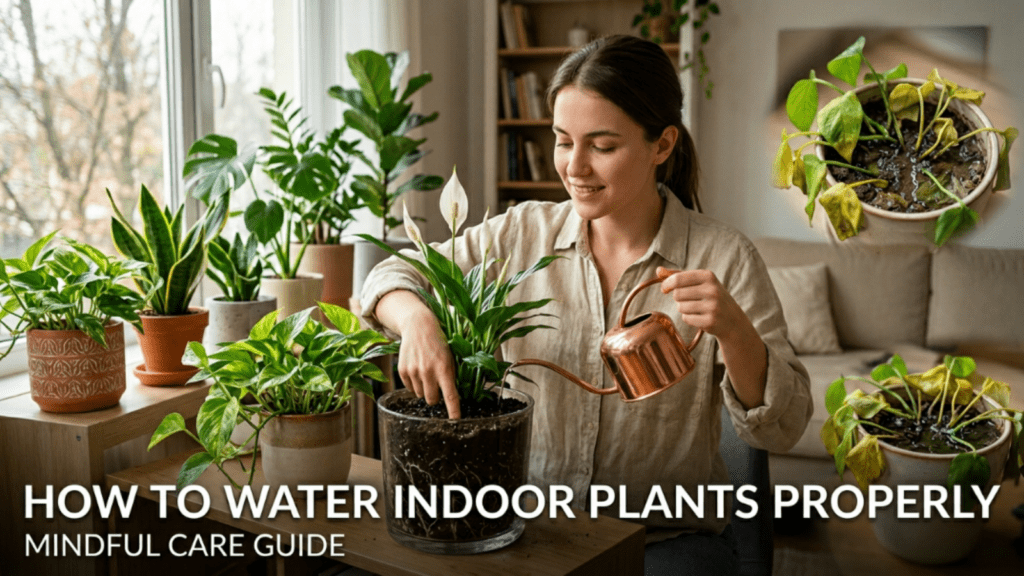
Why Proper Watering is Important for Indoor Plants
Water plays a major role in keeping indoor plants healthy. Plants use water to absorb nutrients from the soil and transport them to leaves, stems, and roots. Proper watering also helps maintain leaf freshness, healthy root growth, and strong overall development.
I noticed that whenever my indoor plants received the correct amount of water, their leaves looked greener, shinier, and healthier. On the other hand, incorrect watering quickly affected their appearance.
Proper watering helps indoor plants:
- Grow stronger roots
- Maintain healthy green leaves
- Absorb nutrients properly
- Produce new growth faster
- Resist diseases and stress
Indoor plants usually grow slower than outdoor plants, so maintaining balanced moisture is extremely important.
Understanding That Every Indoor Plant Has Different Water Needs
One mistake I made in the beginning was watering all indoor plants the same way. Later, I realized that different plants need completely different moisture levels.
Indoor Plants That Need More Water
Some indoor plants prefer slightly moist soil most of the time.
Examples include:
- Peace lilies
- Ferns
- Areca palms
- Calatheas
These plants enjoy moderate humidity and regular watering.
Indoor Plants That Need Less Water
Some indoor plants naturally store water and prefer dry conditions.
Examples include:
- Snake plants
- Succulents
- Cactus
- ZZ plants
- Aloe vera
Overwatering these plants can quickly damage their roots.
Understanding the watering needs of each plant is the first step toward successful indoor gardening.
How I Check If Indoor Plants Need Water
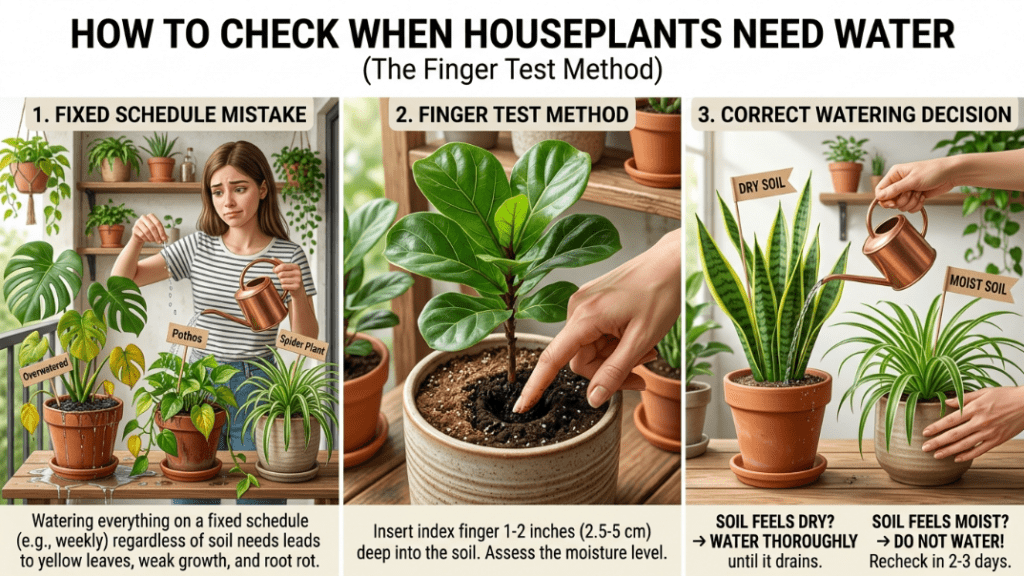
Earlier, I used fixed watering schedules, but I slowly realized that indoor plants don’t always dry at the same speed. Weather, room temperature, sunlight, and humidity constantly affect soil moisture.
Now, I always check the soil before watering.
Finger Test Method
This is the simplest method I personally use.
I insert my finger about 1–2 inches into the soil.
- If the soil feels dry, I water the plant
- If it still feels moist, I wait another day
This small habit helped me prevent overwatering completely.
Checking the Weight of the Pot
Another useful trick I learned is checking the weight of pots.
Dry soil makes pots feel lighter, while moist soil makes them heavier.
For smaller indoor pots, this method works surprisingly well.
Observing Plant Leaves
Indoor plants also give visible signs when watering is incorrect.
Signs of Underwatering
- Dry leaf edges
- Drooping leaves
- Crispy foliage
- Dry soil surface
Signs of Overwatering
- Yellow leaves
- Soft stems
- Fungus growth
- Bad smell from soil
Learning these signs helped me understand my plants much better.
Best Time to Water Indoor Plants
The timing of watering also affects plant health.
Morning Watering is Best
I usually water my indoor plants in the morning because plants absorb moisture more efficiently during the day.
Morning watering helps:
- Reduce fungal problems
- Improve moisture absorption
- Allow excess water to dry naturally
- Keep roots healthy
It also prevents the soil from remaining overly wet overnight.
Evening Watering
Sometimes evening watering is fine, especially during hot summers, but I avoid watering too late at night because wet soil in cool conditions may encourage fungus.
Avoid Watering During Peak Heat
If indoor plants are kept near sunny windows, watering during very hot afternoon hours may stress roots slightly due to sudden temperature changes.
Correct Way to Water Indoor Plants
One of the biggest improvements in my gardening happened when I changed the way I watered plants.
Earlier, I used to pour small amounts of water quickly on the soil surface. But shallow watering only wets the top layer and leaves deeper roots dry.
Water Slowly and Deeply
Now I water slowly near the base of the plant until excess water starts draining from the bottom holes.
Deep watering:
- Reaches lower roots properly
- Encourages stronger root growth
- Keeps soil evenly moist
Healthy roots always lead to healthier indoor plants.
Avoid Wetting Leaves Excessively
I try to water the soil directly instead of pouring water over leaves.
Excess moisture on leaves may increase:
- Fungal infections
- Mold growth
- Leaf spots
Some tropical indoor plants enjoy occasional misting, but most plants mainly need proper root watering.
Importance of Drainage in Indoor Pots
One of the most important lessons I learned was never to use pots without drainage holes.
Decorative pots may look attractive, but poor drainage causes water accumulation that slowly damages roots.
Why Drainage Matters
Proper drainage:
- Prevents root rot
- Removes excess water
- Maintains airflow in soil
- Keeps roots healthy
Roots need oxygen as much as they need water.
How to Improve Drainage
These simple methods helped my indoor plants stay healthier:
- Use pots with drainage holes
- Add cocopeat or sand to soil
- Avoid compact heavy soil
- Empty water trays regularly
Balanced moisture and airflow are extremely important for indoor plant roots.
How Often Should You Water Indoor Plants?
There is no universal watering schedule for indoor plants.
Watering depends on:
- Plant type
- Room temperature
- Humidity
- Pot size
- Soil type
- Season
However, most indoor plants generally need watering when the top soil becomes dry.
I personally avoid watering simply because “it’s watering day.” Instead, I focus on soil moisture levels.
Seasonal Watering Tips for Indoor Plants
Indoor plant watering needs change throughout the year.
Summer Watering Tips
During summer, indoor plants may dry faster because of heat and increased sunlight.
In summer, I:
- Check soil moisture frequently
- Water early morning
- Mist humidity-loving plants
- Keep plants away from harsh afternoon sunlight
Winter Watering Tips
In winter, indoor plants usually grow slower and need less water.
I reduce watering frequency and make sure the soil doesn’t remain constantly wet.
Overwatering during winter is one of the biggest causes of root problems.
Rainy Season Tips
During monsoon, humidity levels remain high, so soil dries more slowly.
I water only after checking the soil carefully during rainy weather.
Common Indoor Plant Watering Mistakes
In Gardeninplant Through experience, I learned several mistakes that can seriously affect indoor plant health.
Overwatering
This is the most common problem for indoor plants.
Overwatering causes:
- Yellow leaves
- Root rot
- Fungus growth
- Weak stems
Now I never water indoor plants without checking the soil first.
Underwatering
Ignoring indoor plants for long periods may cause:
- Dry leaves
- Wilting
- Slow growth
- Brown leaf edges
Balanced watering is always important.
Using Pots Without Drainage
Excess water trapped inside decorative pots can slowly kill roots.
I always prioritize drainage over appearance now.
Watering on a Fixed Schedule
Weather and indoor conditions change regularly, so strict schedules don’t always work.
Understanding soil moisture is much more effective.
Helpful Tips That Improved My Indoor Plant Care
These small habits made a big difference in my indoor gardening routine.
Rotate Plants Occasionally
Rotating plants helps all sides receive equal sunlight and prevents uneven growth.
Use Mulch for Large Pots
Cocopeat or dry leaves help reduce moisture loss from soil.
Keep Leaves Clean
Dust blocks sunlight absorption.
I gently wipe leaves with a damp cloth regularly.
Group Plants Together
Grouping plants slightly improves humidity around them.
Benefits of Proper Watering
After improving my watering habits, I noticed major improvements in my indoor plants.
Greener Leaves
Leaves looked fresher and shinier.
Faster Growth
Plants started producing more leaves and branches.
Healthier Roots
Roots became stronger and more active.
Reduced Plant Diseases
Balanced watering reduced fungus and root problems.
Longer Plant Life
Plants stayed healthy for much longer periods.
Final Thoughts
Learning how to water indoor plants properly completely changed my indoor gardening experience. Earlier, I believed watering was a simple daily task, but over time I understood that proper watering is actually the foundation of healthy indoor plants. Every plant has different moisture needs, and observing the soil carefully is far more important than following fixed schedules.
By watering deeply, checking soil moisture regularly, ensuring proper drainage, and adjusting care according to seasons, anyone can grow beautiful and healthy indoor plants successfully. Small improvements in watering habits can create a huge difference in plant growth, leaf quality, and overall plant health.
If you truly want greener, healthier, and happier indoor plants, improving your watering routine is one of the best things you can do for your indoor garden.