When I first started gardening, I thought watering plants was the easiest part. I used to water all my pots daily without even checking the soil because I believed “more water means healthier plants.” But after seeing yellow leaves, root rot, and weak growth in many of my favorite plants, I realized that proper watering is actually one of the most important gardening skills. Learning how to water pot plants properly completely changed the health of my garden and helped my plants grow greener, stronger, and faster.
Every plant needs water, but the real secret is knowing when, how, and how much to water. Too little water causes dryness and weak growth, while too much water slowly damages the roots. Whether you grow indoor plants, flowering plants, vegetables, or decorative balcony pots, proper watering can make a huge difference.
In this detailed guide, I’ll share everything I’ve personally learned about watering pot plants correctly, including common mistakes, watering techniques, seasonal care, and simple tips that truly work.
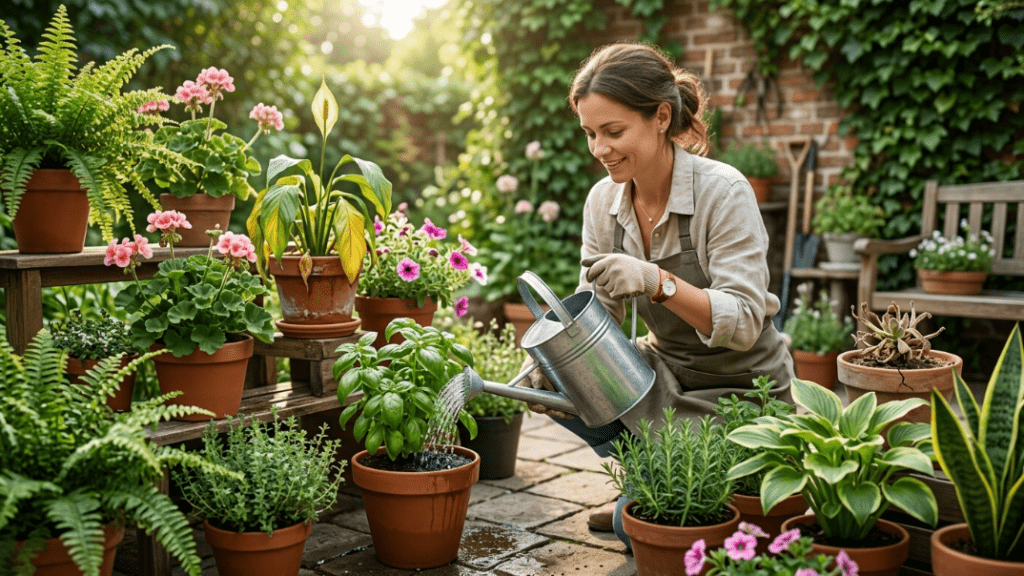
Why Proper Watering is So Important
Water is essential for every plant because it helps carry nutrients from the soil to different parts of the plant. Healthy watering habits support root growth, leaf production, flowering, and overall plant strength.
I noticed that whenever I watered my plants correctly, the leaves looked fresher, the soil stayed healthy, and new growth appeared much faster. On the other hand, improper watering made plants weak even when I used good soil and fertilizers.
Proper watering helps plants:
- Absorb nutrients efficiently
- Maintain healthy roots
- Produce greener leaves
- Grow flowers and fruits properly
- Resist diseases better
Without proper watering, even the healthiest plant can struggle.
Understanding That Every Plant Has Different Water Needs
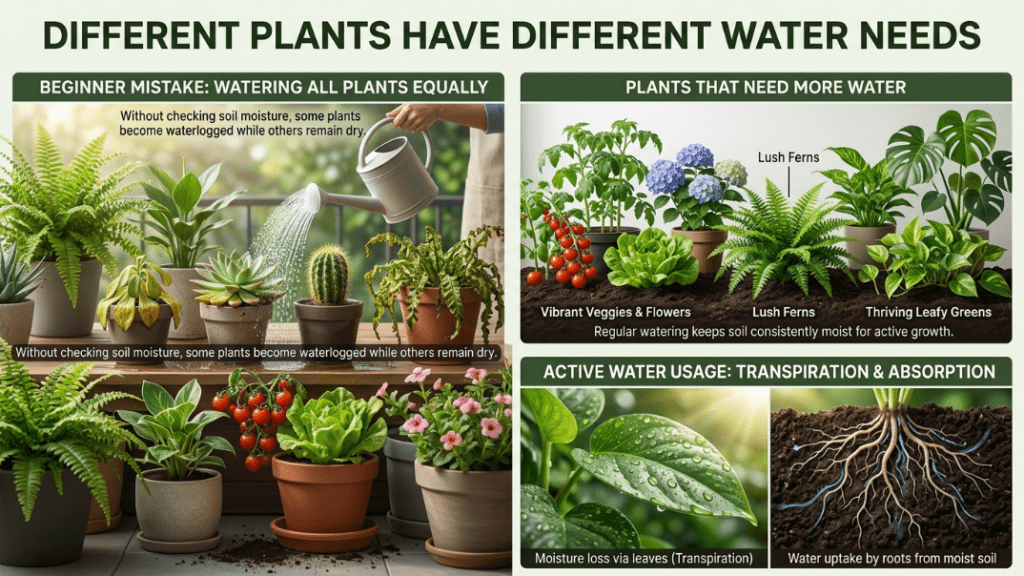
One mistake many beginners make is giving the same amount of water to every plant. I used to do this too. Later, I realized that different plants have completely different watering requirements.
Plants That Need More Water
These plants usually prefer moist soil:
- Vegetable plants
- Flowering plants
- Ferns
- Leafy indoor plants
These plants grow actively and lose more water through their leaves.
Plants That Need Less Water
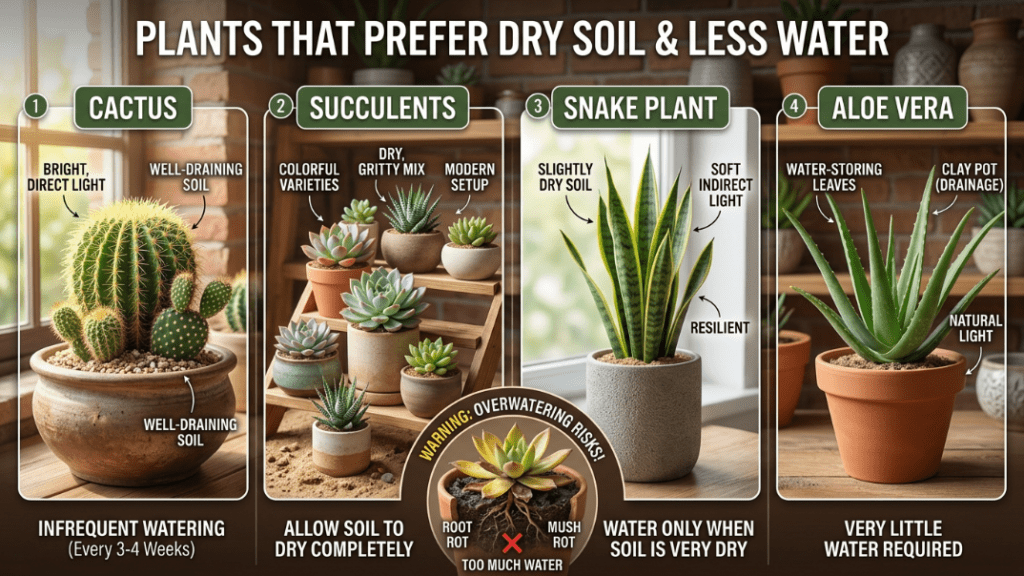
Some plants actually grow better in slightly dry soil.
Examples include:
- Cactus
- Succulents
- Snake plants
- Aloe vera
Overwatering these plants can quickly damage their roots.
Understanding the needs of each plant is the first step toward successful watering.
How I Check Whether My Plants Need Water
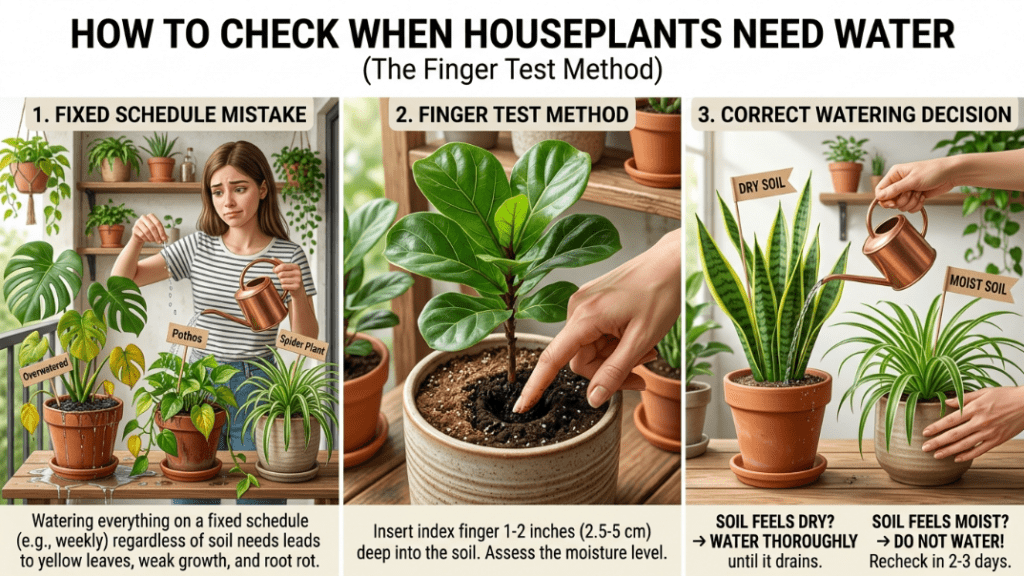
Earlier, I watered plants based on a fixed schedule. But now I always check the soil first because weather and plant needs keep changing.
Finger Test Method
This is the easiest method I personally use every day.
I insert my finger about 1–2 inches into the soil.
- If the soil feels dry, I water the plant
- If the soil still feels moist, I wait another day
This simple habit helped me avoid overwatering completely.
Checking Plant Leaves
Plants also show visible signs when they need water.
Signs of Underwatering
- Dry soil
- Drooping leaves
- Crispy leaf edges
- Weak stems
Signs of Overwatering
- Yellow leaves
- Soft stems
- Fungus growth
- Bad smell from soil
Learning these signs helped me understand my plants much better.
Best Time to Water Pot Plants
Over time, I noticed that the timing of watering affects plant health more than many people realize.
Morning is the Best Time
I prefer watering my plants early in the morning because the soil absorbs water properly before the heat increases.
Morning watering helps:
- Reduce evaporation
- Keep roots cool
- Prepare plants for daytime heat
- Prevent fungal diseases
Plants stay hydrated throughout the day when watered in the morning.
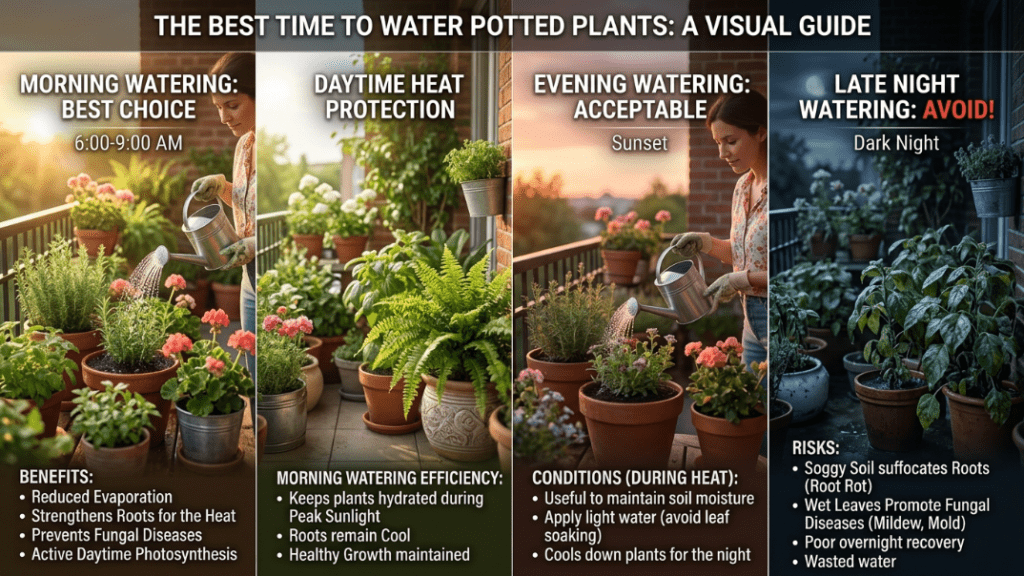
Evening Watering
Sometimes during extremely hot summer days, I water plants in the evening too. But I avoid watering too late at night because wet soil and leaves overnight may encourage fungal growth.
Avoid Watering in Hot Afternoon Sun
I learned this lesson the hard way. Afternoon watering often evaporates quickly, especially during summer, and plants may not absorb enough moisture.
Correct Way to Water Pot Plants
Many people pour water quickly only on the surface of the soil. I used to do the same in the beginning, but shallow watering creates weak roots.
Water Slowly and Deeply
Now I water slowly near the base of the plant until water starts draining from the bottom holes.
This method:
- Reaches deeper roots
- Encourages stronger root growth
- Keeps soil evenly moist
Deep watering is much healthier than giving small amounts daily.
Avoid Wetting Leaves Too Much
I always try to water directly into the soil instead of splashing water all over the leaves.
Excess moisture on leaves may lead to:
- Fungal infections
- Leaf spots
- Pest problems
Some humidity-loving indoor plants enjoy light misting, but most plants prefer root watering.
Importance of Drainage in Pots
One of the biggest mistakes I made during my early gardening days was using decorative pots without drainage holes. The plants looked beautiful initially but slowly started dying because water collected at the bottom.
Why Drainage Matters
Good drainage prevents waterlogging and allows roots to breathe.
Without drainage:
- Roots rot quickly
- Soil remains soggy
- Fungal diseases develop
Now I always choose pots with proper drainage holes.
Tips to Improve Drainage
- Use loose potting mix
- Add sand or cocopeat to soil
- Place small stones at the bottom
- Never block drainage holes
Healthy roots need both water and oxygen.
Seasonal Watering Tips I Personally Follow
Plant watering needs change throughout the year. Following seasonal adjustments improved my gardening results significantly.
Summer Watering Tips
Summer heat dries pots quickly, especially balcony and terrace plants.
During summer, I:
- Water early morning daily if needed
- Check soil moisture regularly
- Use mulch to reduce evaporation
- Shift sensitive plants away from harsh afternoon sun
Small pots dry faster, so they need more attention.
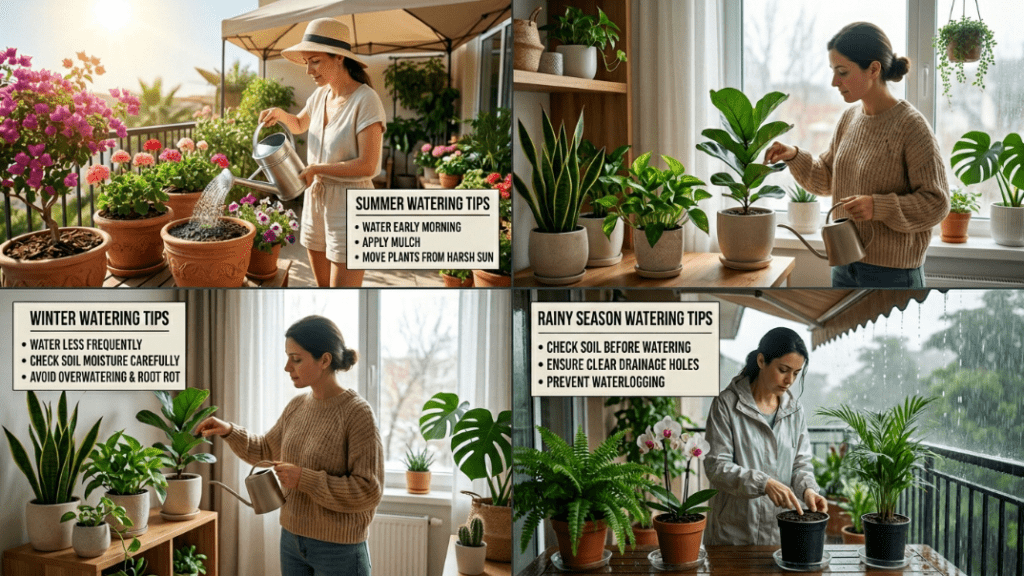
Winter Watering Tips
In winter, plants usually require less water because evaporation becomes slower.
I reduce watering frequency and make sure the soil doesn’t stay constantly wet.
Overwatering during winter can damage roots very easily.
Rainy Season Watering Tips
During monsoon, I always check the soil before watering because rainwater may already keep the pots moist.
I also ensure drainage holes remain clear to prevent water accumulation.
Common Watering Mistakes I Learned to Avoid
Gardening taught me many lessons through trial and error. These are some common mistakes I now avoid carefully.
Overwatering
This is probably the most common reason for plant problems.
I used to think watering daily was good for plants, but overwatering caused:
- Yellow leaves
- Root rot
- Weak stems
- Fungus growth
Now I only water when needed.
Underwatering
Ignoring plants for several days can dry out roots completely.
Underwatered plants often show:
- Wilting
- Brown leaf edges
- Slow growth
- Dry compact soil
Balanced watering is the key.
Watering Without Checking Soil
Many people follow strict watering schedules without considering weather or soil condition.
I now trust soil moisture more than fixed routines.
Using Very Cold Water
Extremely cold water can shock plant roots, especially indoor plants.
I usually use normal room-temperature water for most plants.
Helpful Tips That Improved My Plant Watering Routine
Over time, these simple habits helped me maintain healthier plants.
Rotate Pots Occasionally
Rotating pots helps all sides receive equal sunlight and prevents uneven drying.
Use Mulch
I often add dry leaves or cocopeat on top of the soil to reduce moisture loss.
Mulching keeps the soil cooler during summer.
Group Plants Together
Keeping plants close together slightly increases humidity and reduces moisture loss.
Clean Drainage Trays
Standing water in trays can attract mosquitoes and damage roots.
I empty trays regularly after watering.
Indoor vs Outdoor Plant Watering
Indoor and outdoor plants behave differently.
Indoor Plants
Indoor plants usually need less water because they receive less sunlight and wind exposure.
I’m extra careful not to overwater indoor pots.
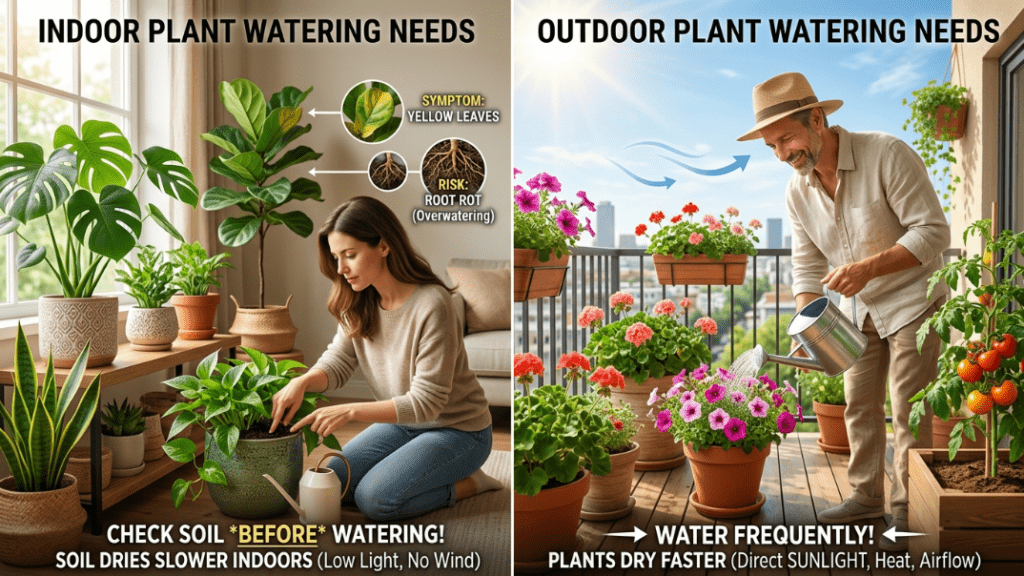
Outdoor Plants
Outdoor plants dry faster due to sunlight and airflow.
Terrace and balcony plants may require frequent checking during hot weather.
Benefits of Proper Watering
Once I improved my watering habits, I noticed major changes in my garden.
Healthier Roots
Roots became stronger and more active.
Faster Plant Growth
Plants started producing more leaves and new branches.
Better Flowering
Flowering plants bloomed more regularly.
Reduced Plant Diseases
Balanced moisture reduced fungus and root problems.
Greener and Shinier Leaves
Plants looked fresher and healthier overall.
Final Thoughts
Learning how to water pot plants properly completely changed my gardening experience. Earlier, I believed watering was the easiest task, but now I understand that proper watering is actually the foundation of healthy gardening. Every plant has different needs, and observing soil moisture carefully is far more important than following fixed schedules.
By watering deeply, checking the soil regularly, using proper drainage, and adjusting care according to weather conditions, anyone can grow healthy and beautiful potted plants. Small changes in watering habits can make a huge difference in plant growth, leaf quality, and overall garden health.
If you truly want greener, healthier, and longer-lasting plants, start by improving your watering routine — your plants will definitely show the difference.